Limestone & Wells
Water & Soil
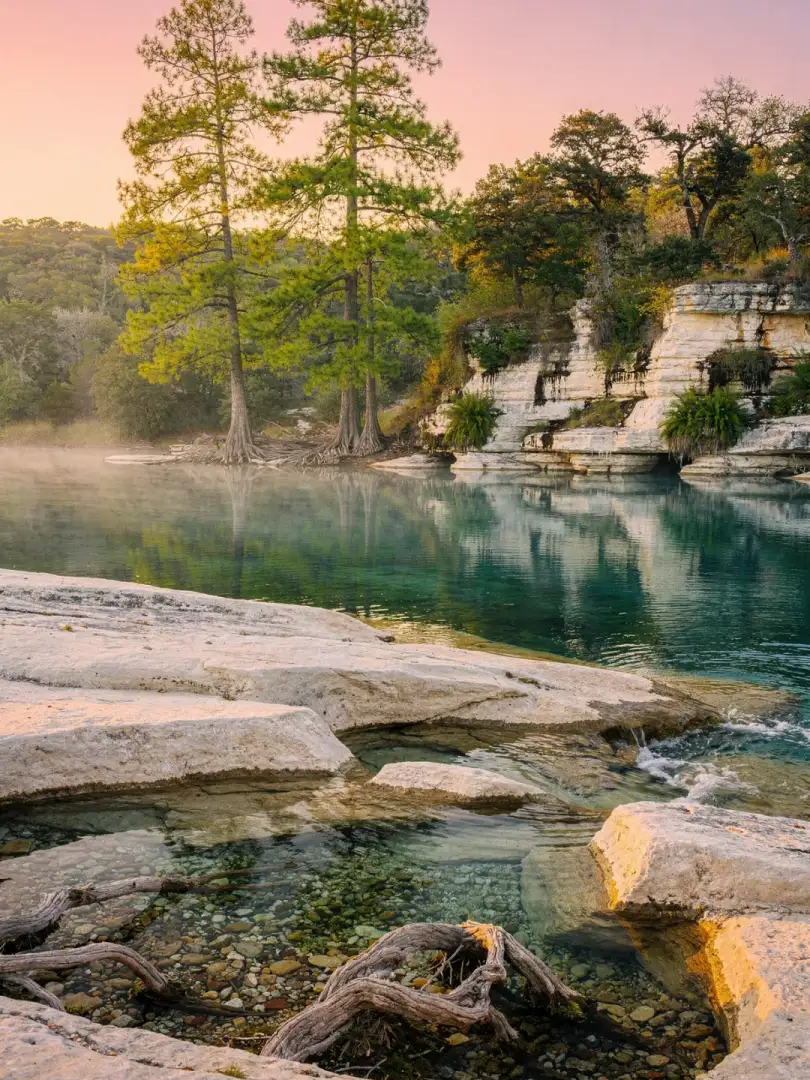
How hard is the water in the Texas Hill Country? It comes from limestone. The hill country is a limestone plateau where rain seeps in and re-emerges through springs, rivers, and wells. The town of Dripping Springs even carries the springs in its name. Breweries rarely publish exact hardness figures, but limestone dissolves calcium and carbonate, making water hard.
This has a noticeable effect on the beer. Carbonate raises the pH in the mash, which suits dark malts whose roasted acids would otherwise make everything taste too sour. For pale beers, brewers must dilute or treat the water, otherwise the beer turns harsh and bitter in the finish. That explains why dark lagers have such a long tradition in limestone-rich regions.
Real Ale in Blanco credits the Blanco River. According to the brewery, the owner calls it one of the best brewing waters for the styles made there. Jester King draws its water from its own well on the farm, a roughly 67-hectare ranch just outside Austin. There, the water becomes part of the story of origin: it's meant to make the place itself felt in the glass.
The climate makes brewing a challenge. Summers are hot, and water runs scarce in Texas when drought hits. Lager demands cool fermentation and long cold conditioning—in the Hill Country, that mostly means refrigeration technology. Where rock cellars help in Franconia, cooling coils and well-insulated tanks do the job here.