Oak or Neutral
Maturation & Storage
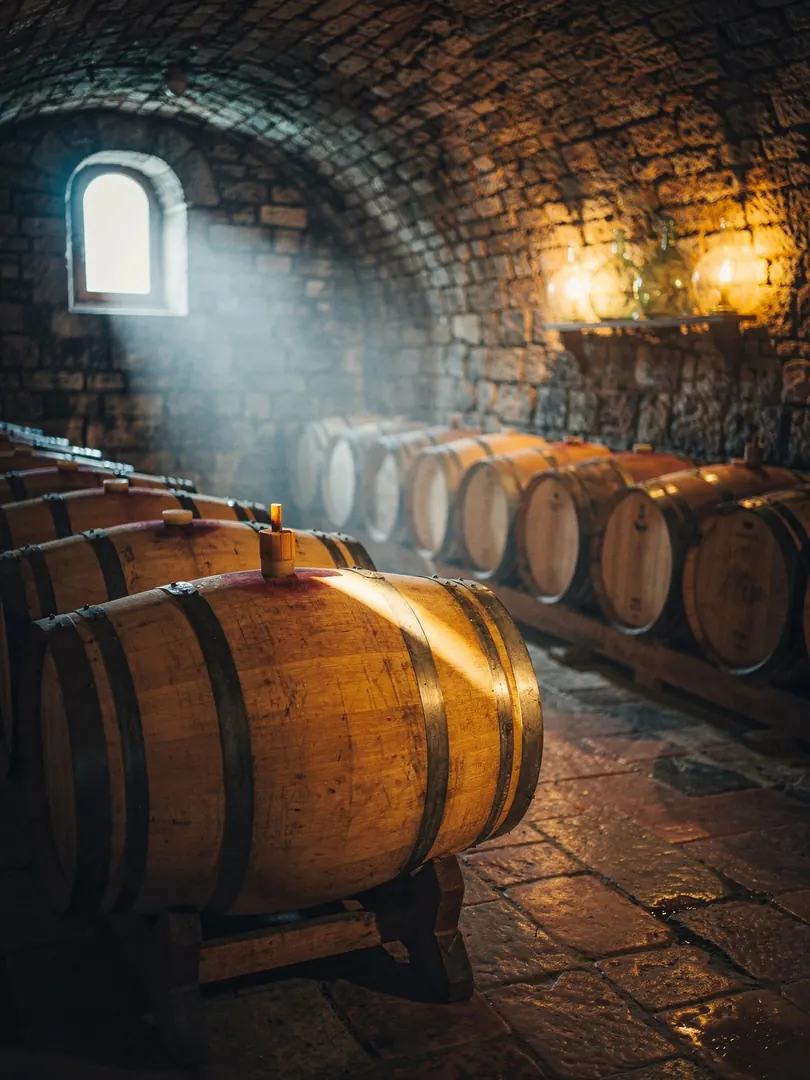
Two brandies, two colors: Hrvatska stara šljivovica is golden to amber, while Brinjevec is crystal clear. With Šljivovica, the color comes from the wood. The specification requires the distillate to rest for at least twelve months in barrels made of Slavonian oak before bottling.
This refers to pedunculate oak, Quercus robur, from Croatia. The wood releases tannins and aromatic compounds, while the distillate also absorbs a small amount of oxygen through the barrel's pores and changes over time. The document describes the result as a plum aroma joined by a tart, woody note. Before bottling, the matured brandy is reduced with demineralized water to at least 37.5 percent.
The word stara means old, but the number itself is modest: twelve months is the minimum, and the specification requires no more. Whether a house gives the brandy more time is up to the distiller. The longer it rests in the barrel, the stronger its color and aroma become, as the document describes it.
Slavonska šljivovica also matures in barrels of Slavonian oak, which gives it its own distinctive flavor characteristics.
Clear fruit brandies typically rest in glass demijohns or stainless steel. Neither material imparts anything, so the fruit stays front and center. Fruit brandies can, in principle, also be aged in wood, such as oak, ash or acacia. In that case, the wood is meant to shape the character rather than mask it. In the glass, a Brinjevec looks exactly as its origin description demands: colorless and clear.
Stone fruit brandies like plum are best stored in the dark, since light can turn hydrocyanic acid into ethyl carbamate, a suspected carcinogen. The law permits fruit brandies, after at least one year in wood, to use caramel coloring for color adjustment. The specification, however, explicitly attributes the color of Hrvatska stara šljivovica to the barrel itself.