Once or Twice
Distillation
How does fermented plum mash become a brandy? The mash is heated in a still, the alcohol evaporates before the water and is then condensed back into liquid. Hrvatska stara šljivovica requires a distillate of 60 to 75 percent alcohol, to preserve the plum's aroma and flavor. Only later is it brought down to drinking strength.
The distiller separates the distillate into three parts. First comes the heads, which smell sharply of solvent, then the hearts, the heart of the run, and finally the tails, with heavy, fusel-like notes. Methanol doesn't collect only in the heads; it's spread throughout the whole run. That's why a clean cut is necessary, though it's no guarantee of safety. Distilling without a permit is a criminal offense in Germany.
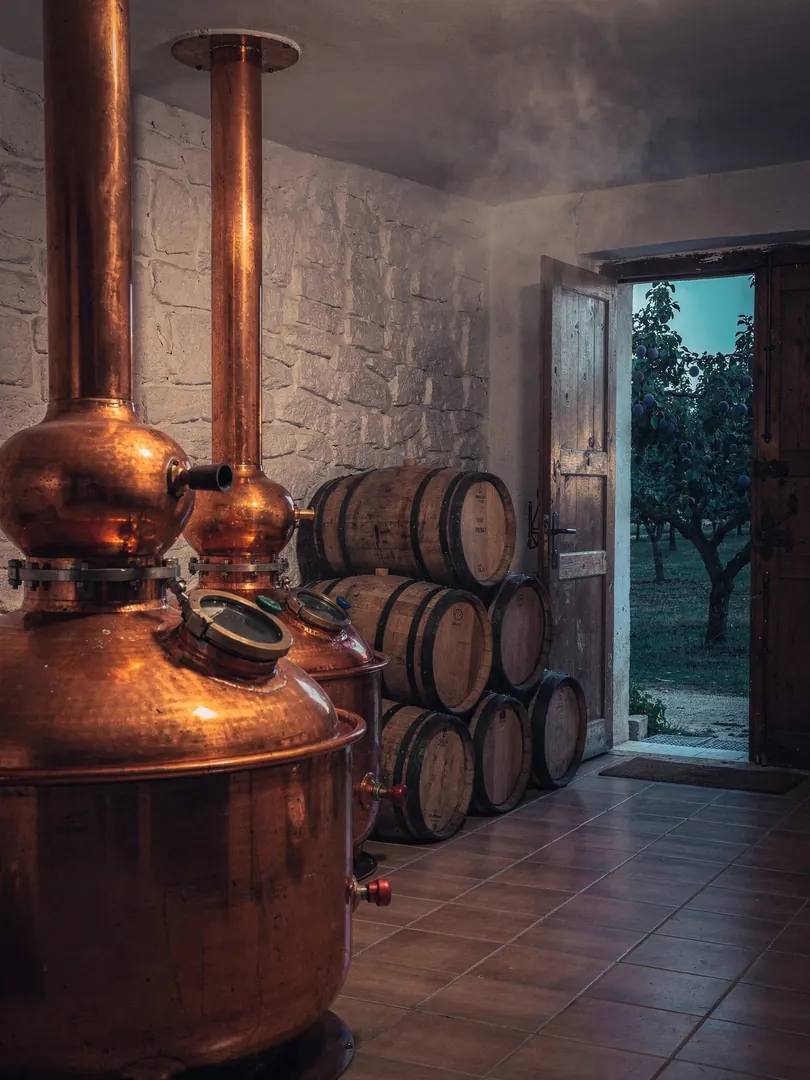
Copper is the material of choice for the still, since it conducts heat well and binds sulfur compounds that would otherwise make the brandy smell like rotten eggs. A rectifying column can further purify and strengthen the distillate. Which design a producer uses depends on house style; EU law only requires that distillation stay below 86 percent alcohol.
According to its specification, Slavonska šljivovica is distilled in a single pass. This keeps the distillate fruity with a bit of sharpness, which later mellows in the barrel. Brinjevec takes a different path: according to Slovenian public radio, it's double-distilled in a special copper still. Tradition has it that Napoleon's troops brought the stills to the Karst plateau in the early 19th century, though this story isn't documented.
Hrvatska travarica and Zadarski maraschino follow a different process altogether. Travarica is a flavored wine distillate or brandy to which herbs or herbal extracts are added. Maraschino, meanwhile, draws most of its aroma from the distillate of the marasca cherry, which is sweetened into a liqueur.