Cultural Heritage 2022
Region & History
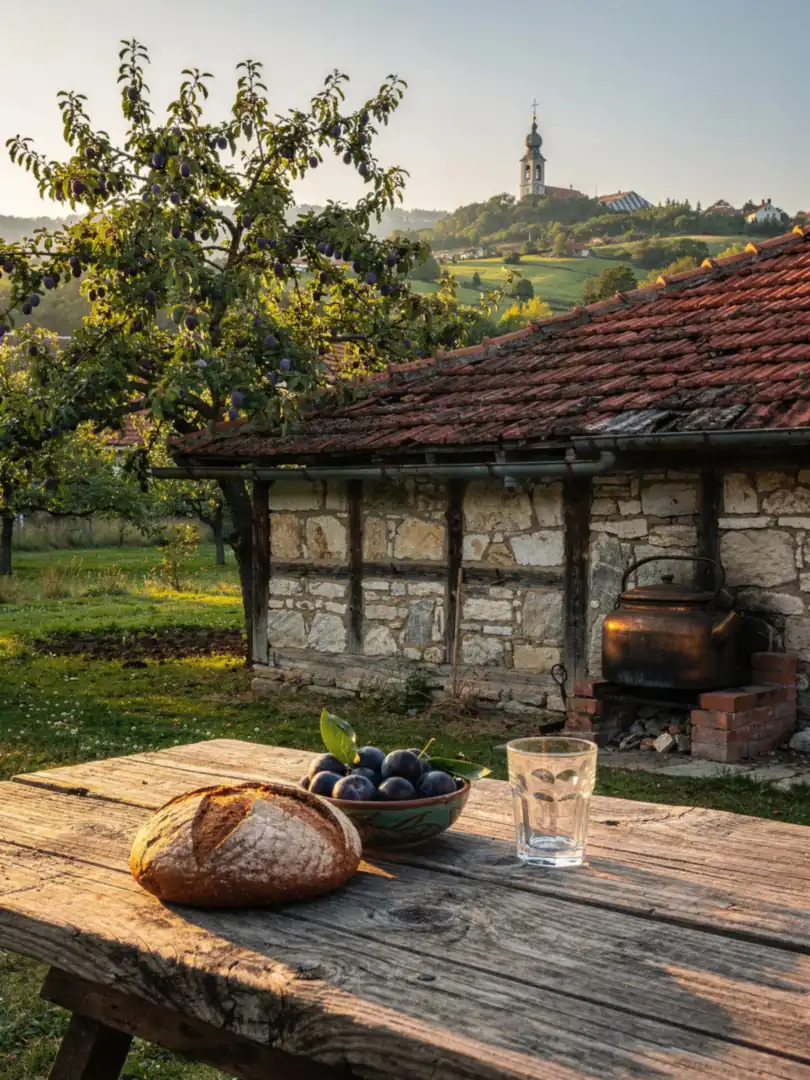
Why is a plum brandy on the UNESCO list? Because Šljivovica is more than just a drink in Serbia: at its session in Rabat, held from November 28 to December 3, 2022, a UNESCO committee inscribed the "social practices and knowledge related to the preparation and use of the traditional plum brandy Šljivovica" on the Representative List of the Intangible Cultural Heritage of Humanity.
What's honored here is a skill, not a label. It refers to the knowledge of making the brandy at home, and how it's used in everyday life and rituals. This knowledge is passed down within families and village communities: younger generations grow into the individual tasks step by step. According to UNESCO's reasoning, it's mainly women who pass on the knowledge of rituals, home remedies, and cooking, and even the craft of making copper stills is taught in workshops.
What's the difference between Rakija and Šljivovica? Rakija is the umbrella term for fruit and grape brandies across the Balkans, while Šljivovica specifically refers to the one made from plums. It has nothing to do with Turkish Rakı, an anise spirit. In many rural households of Western Serbia, the brandy is still made at home today, with a large portion staying within the family, given as gifts, or served at celebrations.
Legally speaking, the situation is straightforward. Serbia is not an EU member, and no Serbian brandy appears in the EU register of geographical indications. The UNESCO listing is not a quality seal: it says nothing about the strength, age, or origin of any particular bottle.
The following stages explain how the distilling process works. Anyone in Germany wishing to turn fruit into brandy themselves needs a permit; private distilling without one is prohibited.