Western Serbia's Plums
Fruit & Raw Material
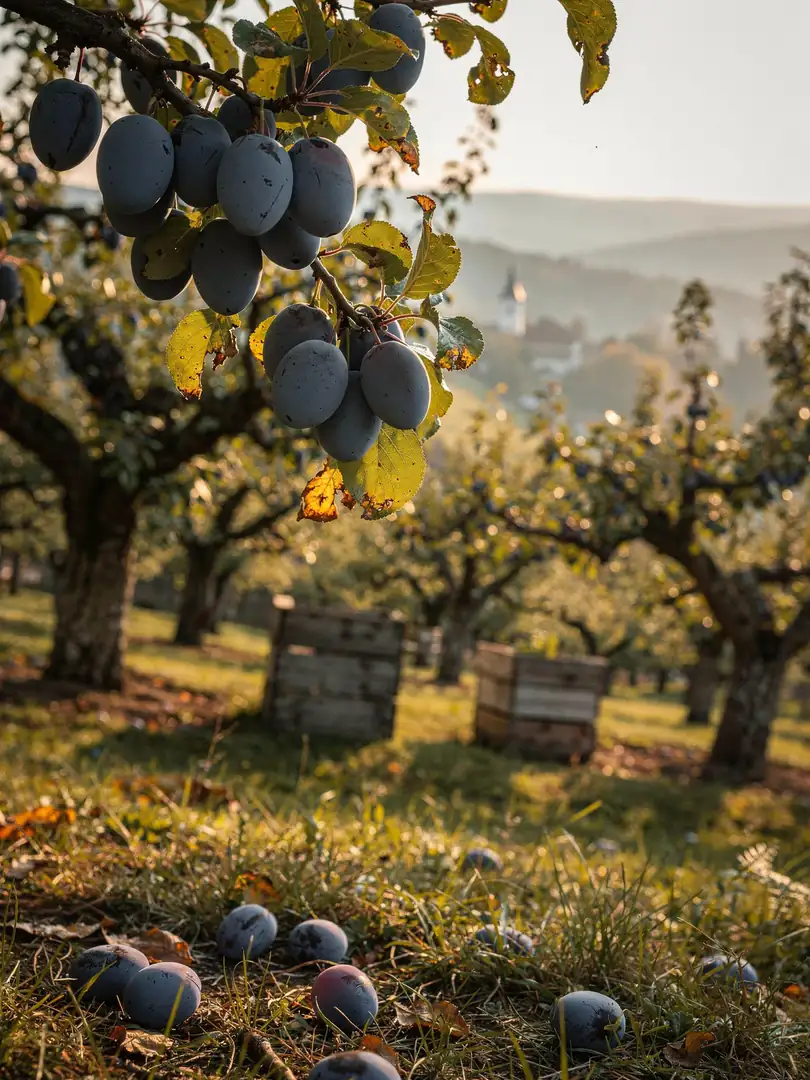
Which plums go into Šljivovica? In western Serbia, it's mainly two old heirloom varieties, Požegača and Crvena ranka. Plum trees shape the hilly landscape there. Added to these are newer cultivars from the fruit institute in Čačak, such as Čačanska rodna, a cross of two older varieties, and the widely grown Stanley.
Požegača is considered one of the oldest varieties that made Serbia known around the world, and it once turned the country into a major plum exporter. According to trade publications, most of the trees grow on private farms around Valjevo, Požega, and Čačak. A large portion of the harvest ends up in the brewing kettle, the kazan.
Picking and distilling take place in autumn, usually with fruit from the family farm. The plums should be ripe, soft, and sweet, since the fruit's sugar turns into alcohol during fermentation. The more sugar, the more brandy a given weight of fruit yields. The timing of the harvest shapes the flavor more than many techniques used in the distillery. Rotten fruit, on the other hand, spoils the brandy and is sorted out.
The pit is its own matter. With plums, it's usually left in the mash, and it's what gives the brandy its subtle note of bitter almond, which many people appreciate in plum brandy. Too much of this is considered a flaw, since crushed pits release hydrogen cyanide. The fruit's pectin matters too: it turns into methanol, which is exactly why legal limits exist.
Why the plum, of all fruits? Fresh plums don't keep long, but as brandy, they last for years. Whatever the fresh market can't absorb ends up in the still instead, and that's how a single fruit variety became a family tradition, passed down from elders to younger generations, as UNESCO notes.