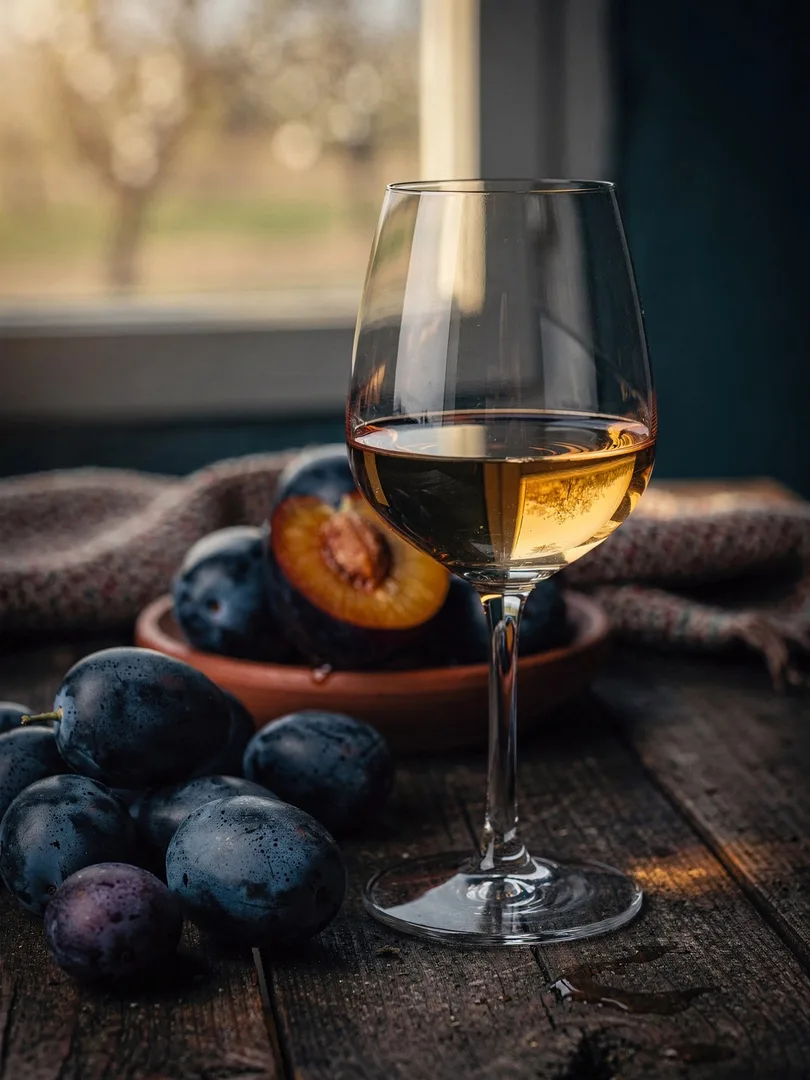
Šljivovica, Prepečenica
Brandy Style
Šljivovica or Slivovitz: what's the difference? None in terms of content. Šljivovica is the South Slavic name, Slivovitz is the spelling common in Western Europe and the US, and "Slibowitz" is a permitted short designation for plum brandy under EU spirits regulation.
The basic style is clear: a brandy distilled from fermented plums, pits included, usually 40 to 45 percent alcohol, dry with no added sugar, with ripe plum and a hint of bitter almond on the nose. The range spans from young, crystal-clear brandy to golden barrel-aged versions.
Prepečenica is the double-distilled variety. The name derives from repeating the distillation, referring to a brandy that, through the second run, comes across clearer, stronger, and with a firmer aroma than a single-distilled version.
But Rakija means more than just plum brandy in the Balkans. Grapes yield Loza, apricots yield Kajsija, and they all belong to the same family of fruit and grape brandies. Anyone looking specifically for Šljivovica should check the label for the word Šljivovica or "plum brandy."
Important for context: there is no EU-protected designation of origin for Serbian brandies. So whatever a bottle states about its origin or age is a producer's claim, not an officially verified name. The UNESCO listing honors the practice, not any single product. Compared to plum brandies from EU countries with their own protected designations, Serbia lacks such a framework; the style there is shaped by families, varieties, and stills rather than by a formal set of rules. The profile below summarizes the two leading styles, with the typical ranges for alcohol content and aging time—individual producers may vary.
ŠljivovicaFruit brandy · Plums (Požegača, Crvena ranka)
- Alcohol
- 40–45 % vol
- Maturity
- 0–2 Years
Clear to golden, ripe plum with bitter almond, dry with a warm finish.