Oak or Glass
Aging & Storage
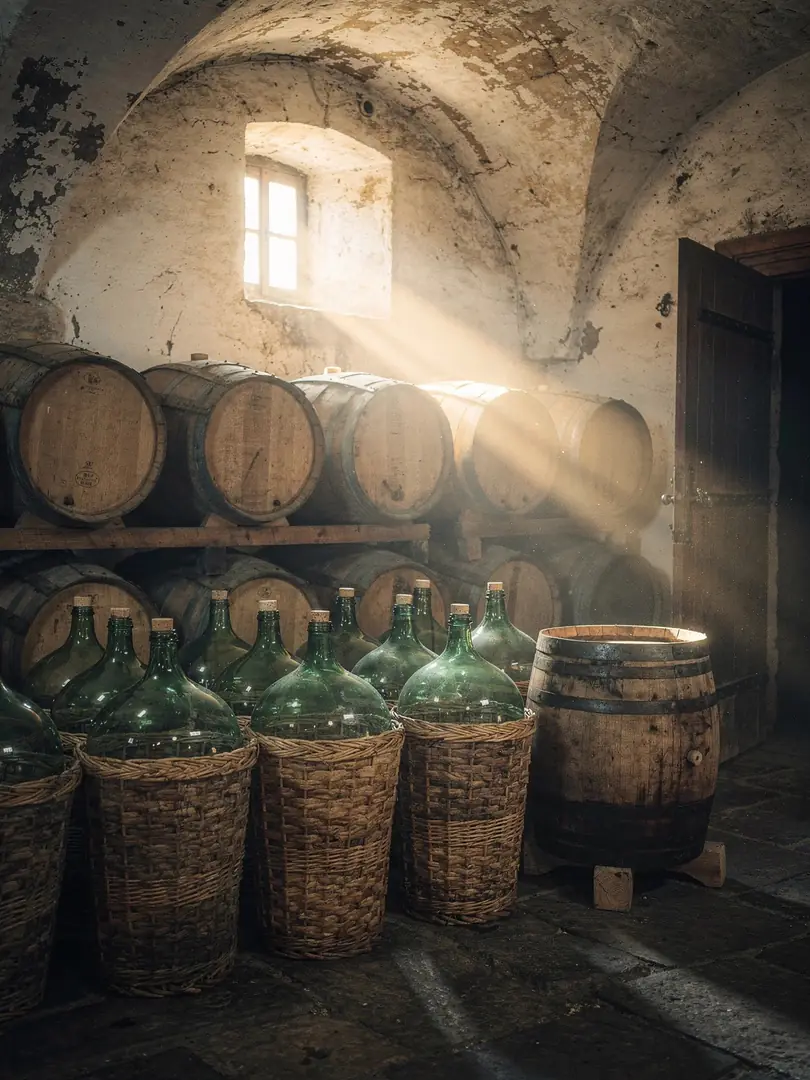
Does Šljivovica have to age in a barrel? Not necessarily. Many brandies go into the bottle young and clear, and that's still Šljivovica. However, UNESCO describes barrel aging, usually in oak, for at least one year, as the final step in preparation.
In wood, the brandy mellows, takes on color, and develops notes of vanilla, wood, and dried fruit. Oak is porous, allowing a little air to seep in, and the wood's tannins soften the brandy's sharp edges. The smaller the barrel, the more contact the brandy has with the wood, and the faster it takes on color.
Fruit brandy may not be colored artificially in the EU. So the golden hue of a barrel-aged brandy should come from the wood itself, not from an additive; only caramel coloring is permitted, and only after at least one year of wood contact. Brandies that remain clear, by contrast, rest in glass or stainless steel, where the aromas settle and the sharpness fades without any wood involved.
During aging, some brandy evaporates through the wood—the so-called angels' share. The longer a barrel rests, the less remains, and the more precious what's left becomes. Brandies distilled decades ago are especially prized in Serbia; according to the country's tourism board, Rakija improves with age.
And what does the label say? For bottles sold in the EU, an age statement may only be given if it refers to the youngest component in the brandy and the aging took place under tax supervision. Words like "old" or "reserve" are producer claims, not official EU classifications. The EU sets no minimum age requirement for Šljivovica.