Salad and Rakia
Food & Tradition
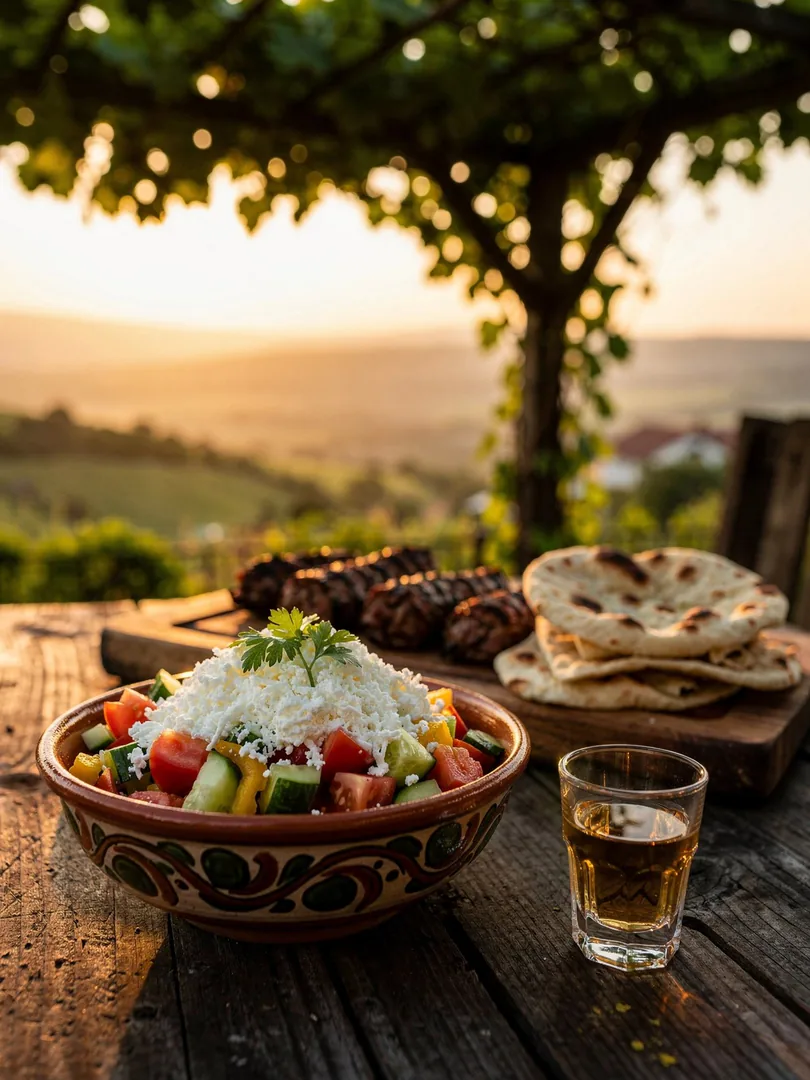
On a Bulgarian table, rakia often sits alongside Shopska salad. It's made of tomatoes, cucumbers, peppers, onion and parsley, topped with grated white cheese. It's named after the Shopluk region in the west of the country, around Sofia.
That the two belong together is a matter of table custom. The salad is traditionally served as a starter, and rakia comes alongside it, before the main course is brought out. The salad is fresh and tangy, the cheese salty and creamy, and the clear rakia cuts through both.
A Muscat rakia with rose aroma can play off the salad's floral note. A plum rakia with oak character, by contrast, has enough weight for grilled dishes like kebapche, the elongated minced-meat rolls.
Anyone traveling through Pomorie on the Black Sea won't miss the Salt Museum, opened in 2002. It shows how sea salt is harvested in salt gardens using the old Anchialos method. The town also lends its name to one of the protected grape rakias.
In the mehana, the traditional Bulgarian tavern, small plates are set out alongside the rakia, such as cheese, salad or air-dried sausage like lukanka. Between sips comes a bite of cheese or a piece of tomato, and so the evening stretches over hours, with conversation woven through it.
Troyan celebrates plum and plum brandy with its own festival, drawing visitors to the town at the edge of the Balkan Mountains.
Rakia sits at the table as a companion. A small glass, sipped slowly between bites, that's how it belongs at a Bulgarian meal.