Rose and Vanilla
Tasting
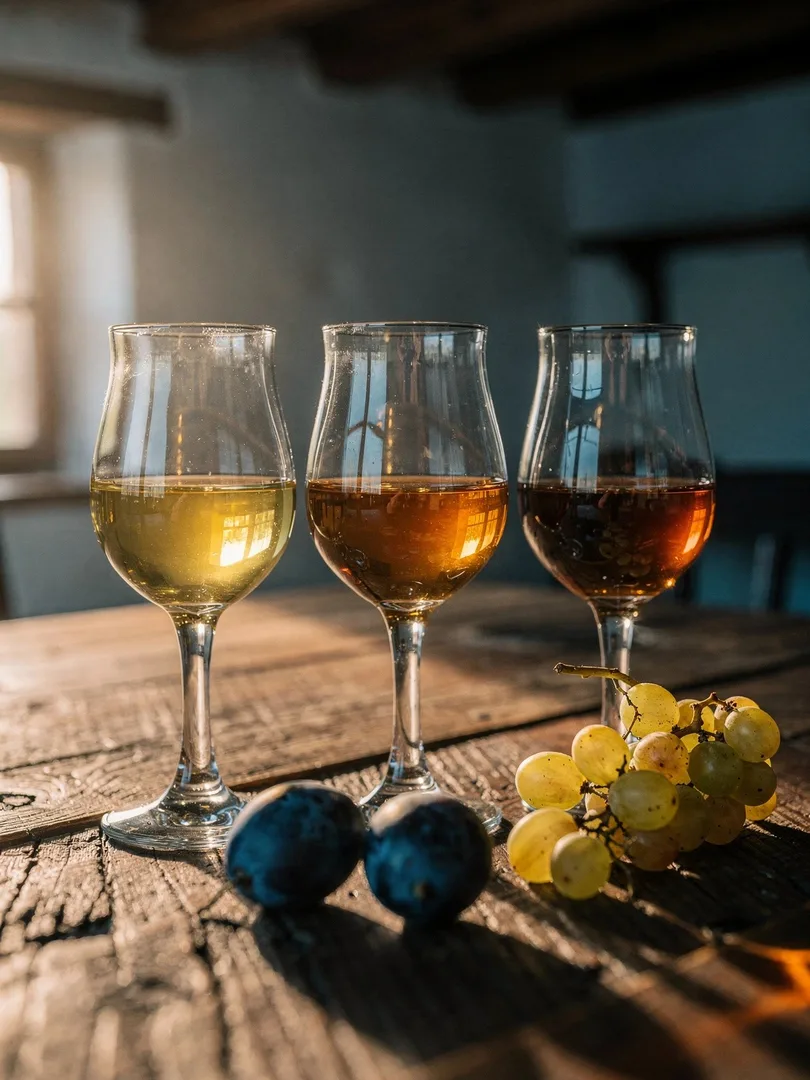
A tulip glass or nosing glass suits rakia well, since it narrows toward the top and gathers the aroma at the opening. At room temperature, leaning cool rather than warm, roughly between 16 and 20°C (61–68°F), the aromas open up best. Served too cold, they stay closed off.
A Slivenska perla first shows its color, from pale yellow to amber. On the nose come rose, rose geranium and Muscat, with a buttery note underneath. This is a Muscat spirit, exactly as the technical file describes.
Straldjanska Muscatova rakya stays more floral and lighter, with rose and geranium up front. Bourgaska Muscatova rakya leans toward dried fruit and vanilla, its aroma warmer and sweeter.
Karnobatska grozdova rakya sits in between. It smells of ripe grapes, with apple and fig alongside. It's pale yellow and at least 40% ABV.
Troyanska slivova rakya has plum at its center, with oak and vanilla layered over it. Batches that spent longer in wood are darker and deeper, recalling aged plums more than fresh ones.
When several rakias are tasted side by side, start with the lightest and finish with the oak-aged plum, since heavy aromas can overpower delicate ones. Between samples, a piece of bread and a sip of water help reset the nose so the difference between blossom and dried fruit stays clear.
On the palate, the finish is what matters. Does the fruit linger, does oak follow, does it turn bitter or stay smooth? A drop of water in the glass can open up the aromas. At high strengths, a small sip is more than enough to pick up everything.