Muscat and Plum
Fruit & Raw Material
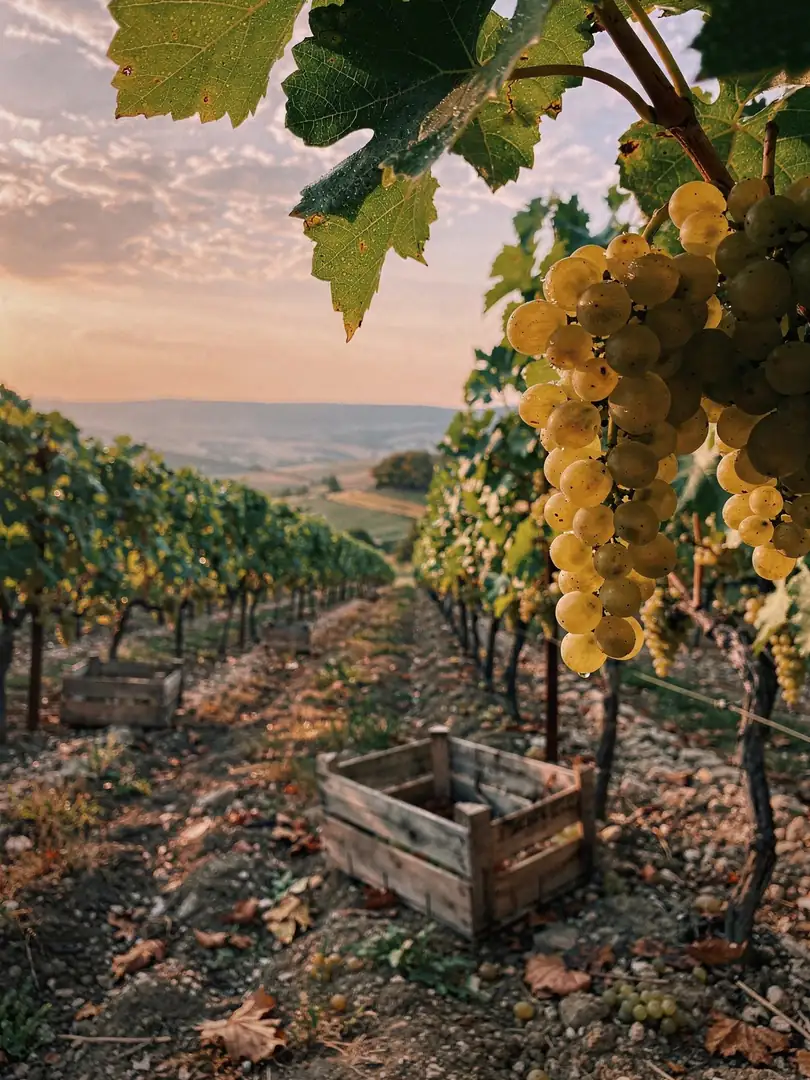
When grapes for Sliven rakia are picked, sweetness is the deciding factor. According to the technical file, the grapes only go into the basket once they're technically ripe and bring at least 19 percent sugar. Muscat Ottonel, Tamyanka and Perle de Csaba are used, three aromatic Muscat varieties. Straldjanska Muscatova rakya likewise relies on Muscat Ottonel, and its aroma recalls rose and rose geranium.
A ceiling is already built into the raw material: from 100 kilograms of grapes, no more than 75 liters of wine may be produced, which is then distilled. Sliven rakia therefore comes from wine, not from the leftovers of pressing. This distinction matters especially with Muscat, since the grape's floral character is meant to come through in the glass.
How different the fruit can taste is shown by the files of neighboring towns. Bourgaska Muscatova rakya is colorless to pale yellow, smells of Muscat, tastes of dried fruit and carries a hint of vanilla. Karnobatska grozdova rakya, by contrast, recalls ripe grapes with hints of apple and fig.
The fruit in the north is entirely different. The blue plums for Troyanska slivova rakya grow in the municipality of Troyan, in the northern foothills of the Balkan Mountains. The technical file cites the particular blend of plum varieties, the traditional technique and aging in small oak barrels as reasons for the flavor. In the glass, plum dominates, accompanied by oak and vanilla.
Why Muscat in particular? The technical file from Sliven notes that the three varieties suit the growing conditions in the area and are especially aromatic. From a wine that smells of rose and geranium comes, naturally, a spirit that smells of rose and geranium.