Wine Instead of Pomace
Mash & Fermentation
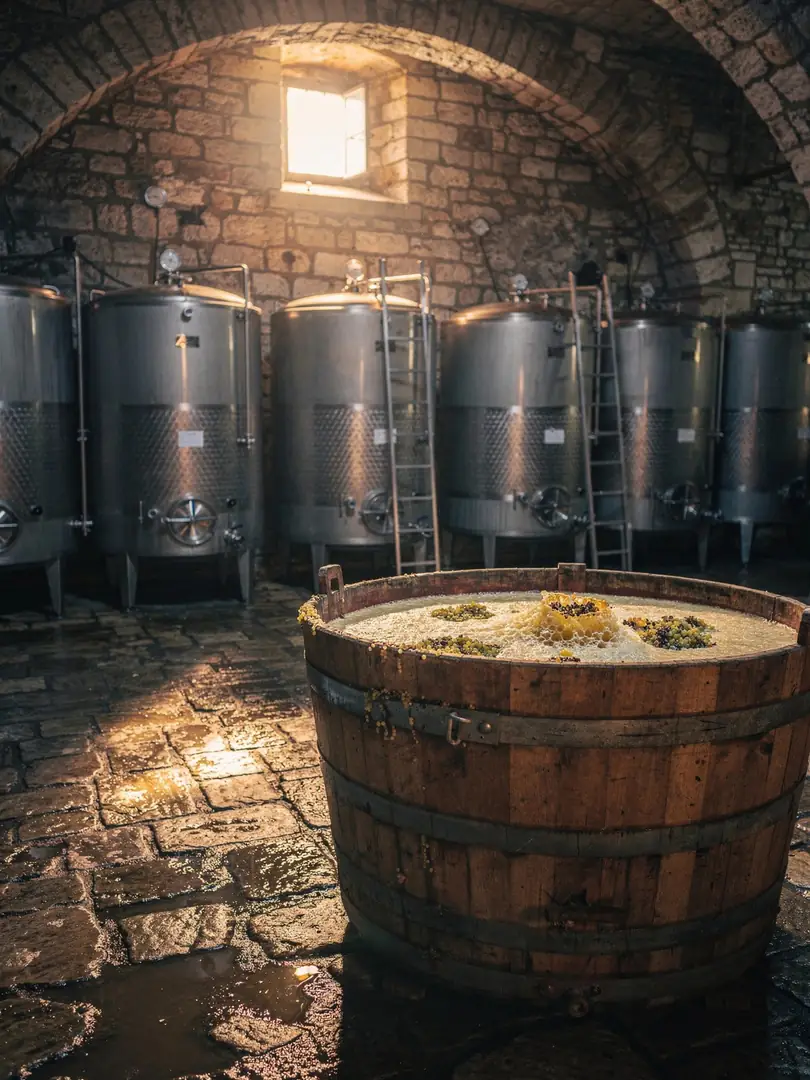
Before a single drop of rakia is made in Sliven or Straldzha, an entirely ordinary wine sits in the tank. The grapes are pressed, the must ferments, and yeasts turn the sugar into alcohol. This base wine is the distiller's raw material.
This is what sets Bulgarian grape rakia apart from grappa, marc or tsipouro. There, skins, seeds and stems ferment after pressing, and the pomace itself goes into the still. In Bulgaria, by contrast, the finished wine goes into the kettle, and the EU regulation classifies such spirits as brandy, not pomace brandy.
The ripeness of the grapes determines how much alcohol the wine gains. That's why the Sliven file requires grapes with at least 19 percent sugar. Riper berries yield a wine richer in alcohol and aroma, exactly what the distiller wants.
With plums, things work differently. The fruit is crushed and set up as mash, fermenting together with the flesh and skin. Whether the pits go into the mash or not is up to the producer; both are allowed under EU law.
Pits lend a subtle almond note. But crushed pits release hydrocyanic acid, which is why the EU limits stone-fruit spirits to a maximum of 7 grams per hectoliter of pure alcohol. A subtle stone note is intentional; too much of it would be a flaw.
Methanol also forms at this stage. It comes from the pectin in the fruit and develops in the mash, not only during distillation. That's why EU law sets maximum levels: 200 grams per hectoliter of pure alcohol for wine spirits, 1,200 grams for plum brandy.