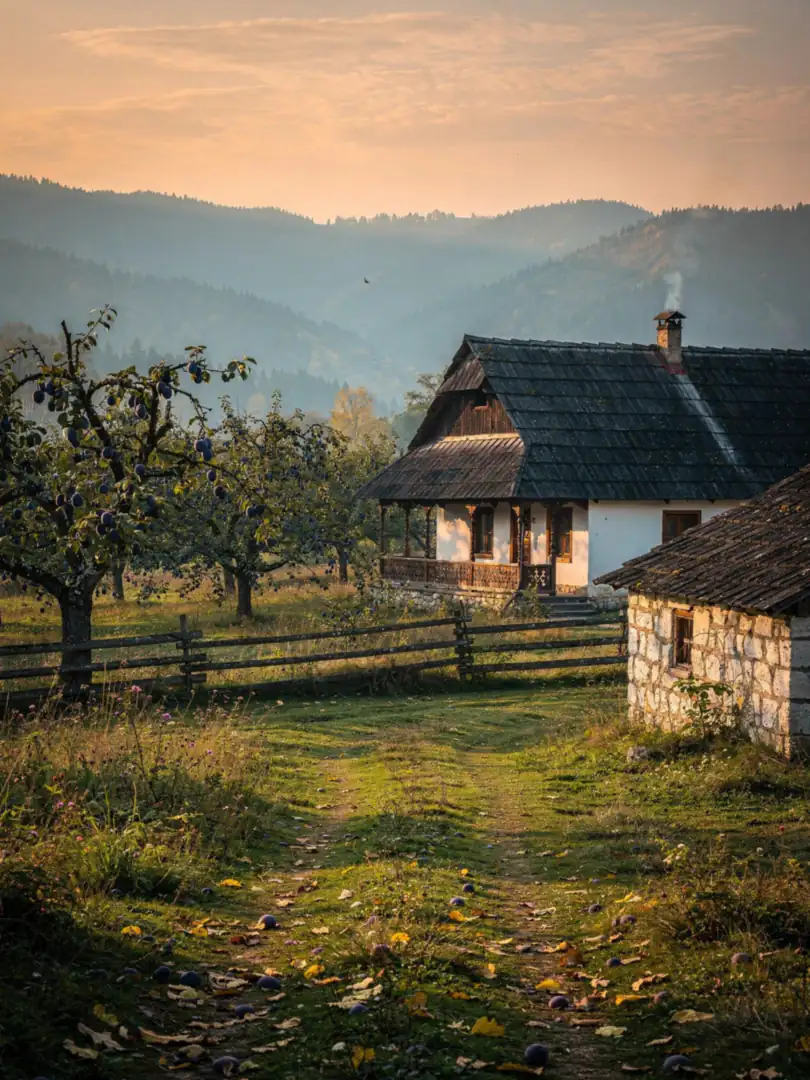
Plum Country of the Carpathians
Region & History
Țuică, Romania's plum brandy, sits on village tables throughout the Carpathian arc as naturally as bread. Since Romania joined the EU in 2007, the European register has listed nine Romanian names for spirits tied to their place of origin. Four belong to fruit brandies, five to wine distillates.
Țuică de Argeș carries the name of a county on the southern edge of the Carpathians. Țuică Zetea de Medieșu Aurit comes from Satu Mare County in the northwest, as does Horincă de Cămârzana. Pălincă is spelled with an ă and registered as its own distinct Romanian name, not as a translation of the Hungarian Pálinka.
The five Vinars names belong to a different family, since Vinars is distilled from wine rather than fruit. Vinars Murfatlar, Vinars Segarcea, Vinars Târnave, Vinars Vaslui and Vinars Vrancea name wine-growing zones stretching from the Black Sea to Transylvania. Applicants listed in the register include Jidvei for Târnave, Domeniul Coroanei Segarcea for Segarcea, and Vincon Vrancea of Focșani for Vrancea and Vaslui.
One more name awaits registration: Țuică de prune Sordony de Horezu is currently listed as pending. In everyday life, though, Țuică sits far above any question of labelling. It accompanies weddings, christenings, harvest festivals and wakes, and in many places is still distilled right in the home village.
Argeș shows what this protection means in practice. According to the register's description, what sets Țuică de Argeș apart is its still, which allows for a short, single-stage distillation, along with plum varieties rich in dry matter. This lets the brandy retain the fruit's natural sweetness, unlike spirits distilled multiple times. The name thus reveals both method and place at once, making it a reliable mark for buyers and distillers alike.