Plum and Vine
Fruit & Raw Material
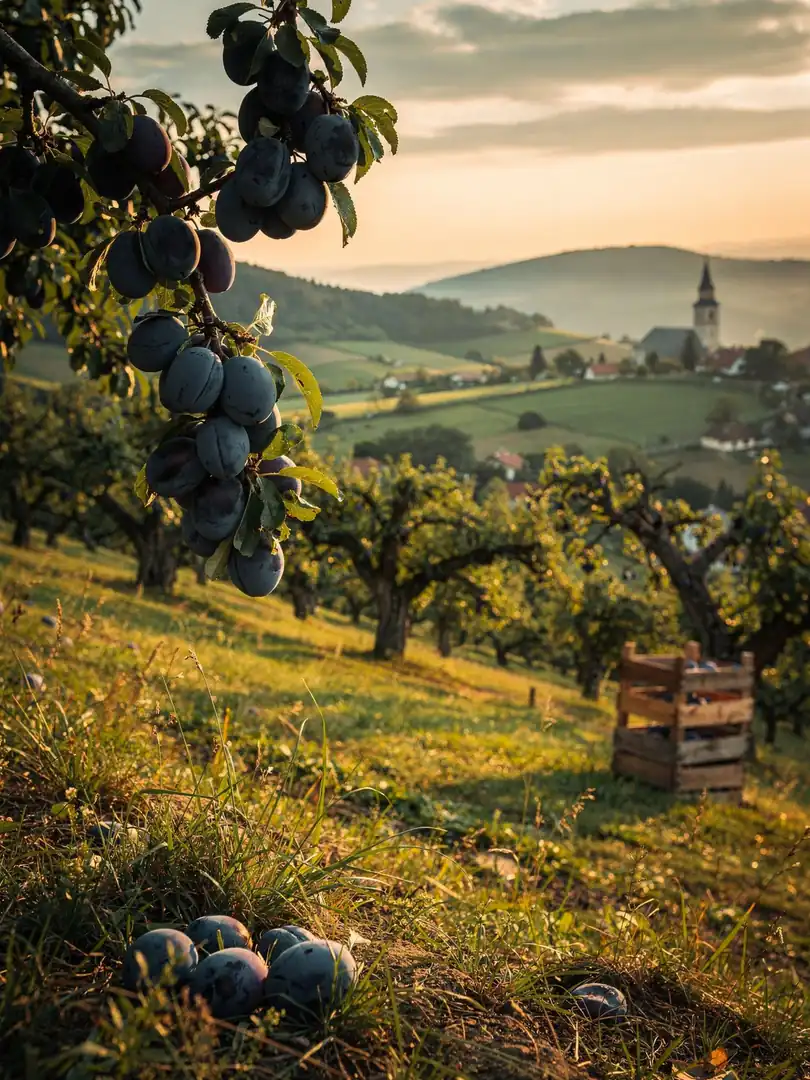
In late summer, the plum trees in the gardens of Argeș hang so heavy that the branches bend. Romania is considered the largest plum producer in the European Union, and a large share of the harvest ends up in the still. The fruit in question is the plum, Prunus domestica, known in Romanian as prună. Yields vary from year to year, so the quantity and sweetness of the harvest fluctuate accordingly.
For Țuică de Argeș, the register specifies plum varieties with a high dry-matter content. Such fruits are fleshy and rich in sugar, carrying little water, so the distillate retains the plum's natural sweetness. Ripeness is key: unripe fruit yields a thin, harsh brandy, since it lacks the sugar from which alcohol later develops.
The raw material isn't the same everywhere. Țuică strictly speaking means plum brandy, but in rural areas, mulberries and mirabelles were also distilled for cost reasons, as was grape pomace. Pălincă, by contrast, can be made from plums, pears, apples or apricots and is considered a specialty of the northwest around Maramureș. Home distillers use whatever ripens in their garden and adjust to the sugar content of that particular fruit.
Horincă de Cămârzana is a plum brandy with a warm, friendly fruit character, to which the pits lend a faint bitter edge. Added to this is the aroma of the particular plum variety used, which the official description explicitly notes. Orchards grow thick across northwestern Romania.
The Vinars names, by contrast, are tied to the vine. Târnave lies in the Transylvanian highlands, Murfatlar near the Dobrogea coast, Segarcea in Dolj County to the south, and Vrancea and Vaslui in Moldavia. According to the producer, Jidvei's Vinars is made only from noble wines. Everything begins with good wine, since flaws in the wine usually carry through into the brandy.