Wood or Glass
Maturation & Storage
Freshly distilled Țuică is often drunk young, clear and full of plum character. Distillers who let it rest first store it in neutral vessels of glass or stainless steel, so the aromas settle and the spirit grows rounder. Stone-fruit brandies should be kept out of light, since light causes traces of hydrocyanic acid to form ethyl carbamate, a compound suspected of being carcinogenic.
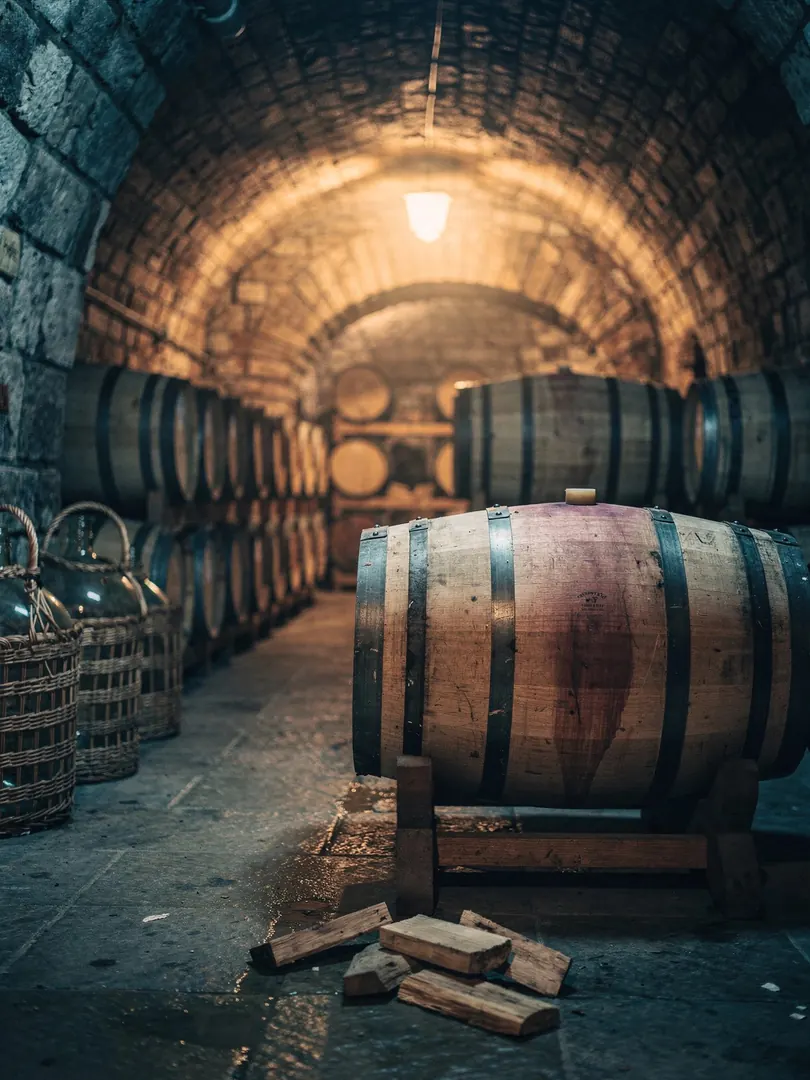
Some distillers give their Țuică time in oak. Aged Țuică is traditionally rested anywhere from six months to ten years. Alongside oak, tradition also mentions mulberry wood as a barrel material. During this time, the clear spirit turns golden and takes on notes of wood spice. In Romanian, it's then called țuică bătrână, or 'old Țuică.'
According to its description, Horincă de Cămârzana matures in oak barrels. The wood smooths the edges of a spirit that, having been distilled twice, is naturally robust.
More happens in the barrel than just colour change. Wood releases vanilla, toasted notes and tannins, while oxygen slowly seeps in through the pores, softening any sharp edges. At the same time, part of the contents evaporates, so the longer a spirit rests, the less remains in the barrel.
For Vinars, EU rules on wine distillates require no minimum maturation. Only when a producer wants to market the spirit as a wine brandy must it rest at least one year in oak vessels of 1,000 litres or more, or six months in smaller barrels. The house of Jidvei states that its Vinars rests at least five years in Transylvanian oak barrels. Whether it's called Vinars Murfatlar, Segarcea, Vaslui or Vrancea makes no difference to this legal requirement.
An age statement on the label may only refer to the youngest component in the blend. A producer blending different vintages therefore cannot market the spirit using the oldest one.