Spirit of the Valleys
Region & History
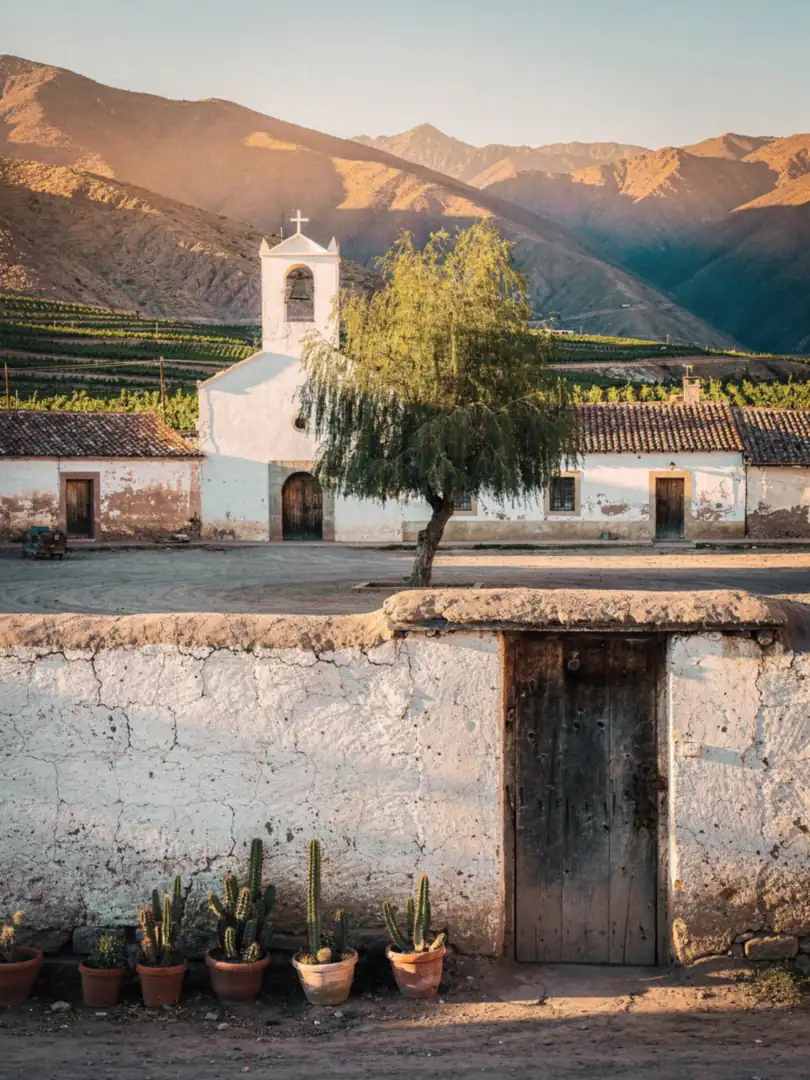
Chilean pisco comes from the regions of Atacama and Coquimbo, a stretch of land on the edge of the desert in the north of the country. Five river valleys cut through this arid landscape from the mountains to the sea, and it's here that the grapes for the spirit grow. Rain is scarce, and the vines draw their water from rivers that rise in the Andes. Elqui and Limarí in the Coquimbo region are the best known of these valleys.
Grape spirit was already being made in the Elqui Valley during colonial times, according to accounts of the valley's history. Tradition names no inventor and no founding year.
The name was enshrined in law in 1931. A decree issued on May 15th, Decreto con Fuerza de Ley No. 181, restricted the term Pisco to spirits from the then-provinces of Atacama and Coquimbo. May 15th is therefore celebrated in Chile as Día Nacional del Pisco.
Today, Decree No. 521 applies, signed on December 30, 1999, and published in the Diario Oficial in May 2000. It names the zone explicitly: the whole of Atacama and the whole of Coquimbo. It requires growers, distillers, and bottlers to be registered with the agricultural service SAG, and demands that every step, from grape to bottle, take place within the pisco zone.
One of the well-known houses is the cooperative Capel in Vicuña, founded according to its own account in February 1938 by 25 members. The Great Depression had caused Chile's exports to plunge by as much as 83 percent, according to the cooperative, and winegrowers banded together to cut costs.
Peru also protects the name Pisco, with its own designation of origin, different rules, and different regions. Both countries lay claim to the name, and in many markets both origins are permitted for sale. That's why the country of origin appears on the label.