Muscat in the Valley
Fruit & Raw Material
Which grapes go into Chilean pisco is spelled out in black and white in Decree No. 521: it names thirteen varieties, the so-called uvas pisqueras, and only vines grown within the pisco zone count. Five of these are classified as primary varieties, the remaining eight as secondary varieties.
The primary varieties are Moscatel de Alejandría, also called uva Italia, Moscatel Rosada or Pastilla, Torontel, Moscatel de Austria, and Pedro Jiménez. Moscatel de Alejandría is known internationally as Muscat of Alexandria and grows in many countries around the world. Three of the five carry Moscatel in their name, belonging to the Muscat family of grapes known for their floral aroma.
For grapes to qualify for pisco production, the decree mandates a minimum sugar level: grapes with less than 10.5 degrees of potential alcohol cannot be used to make pisco. This refers to the alcohol that could later be derived from the sugar in the berries.
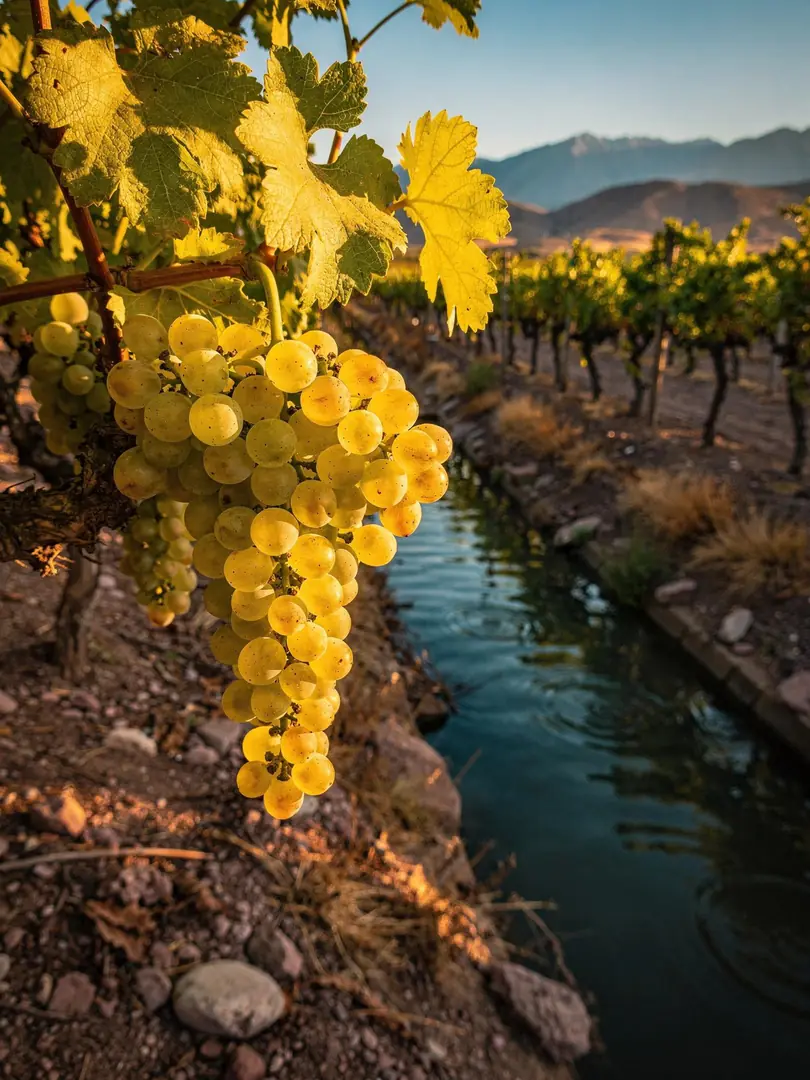
The vines grow in a very dry region with plenty of sun and little rain. On a map, you can see a narrow green strip running along the rivers, flanked on either side by brown mountains. Irrigation comes from river water, and harvest takes place in the southern summer and early autumn, the first months of the year.
Why this particular grape? The decree justifies the designation of origin through the special characteristics that arise primarily from the natural and human factors of the area of origin. In northern Chile, that means sun, dryness, river water, and a winemaking culture dating back to colonial times.
The eight secondary varieties include Moscatel de Frontignan, Moscatel de Hamburgo, Moscato de Canelli, Moscatel Negra, and other Muscat grapes. Every planting, replanting, and grafting of pisco vines must be reported to the agricultural service, stating the variety.