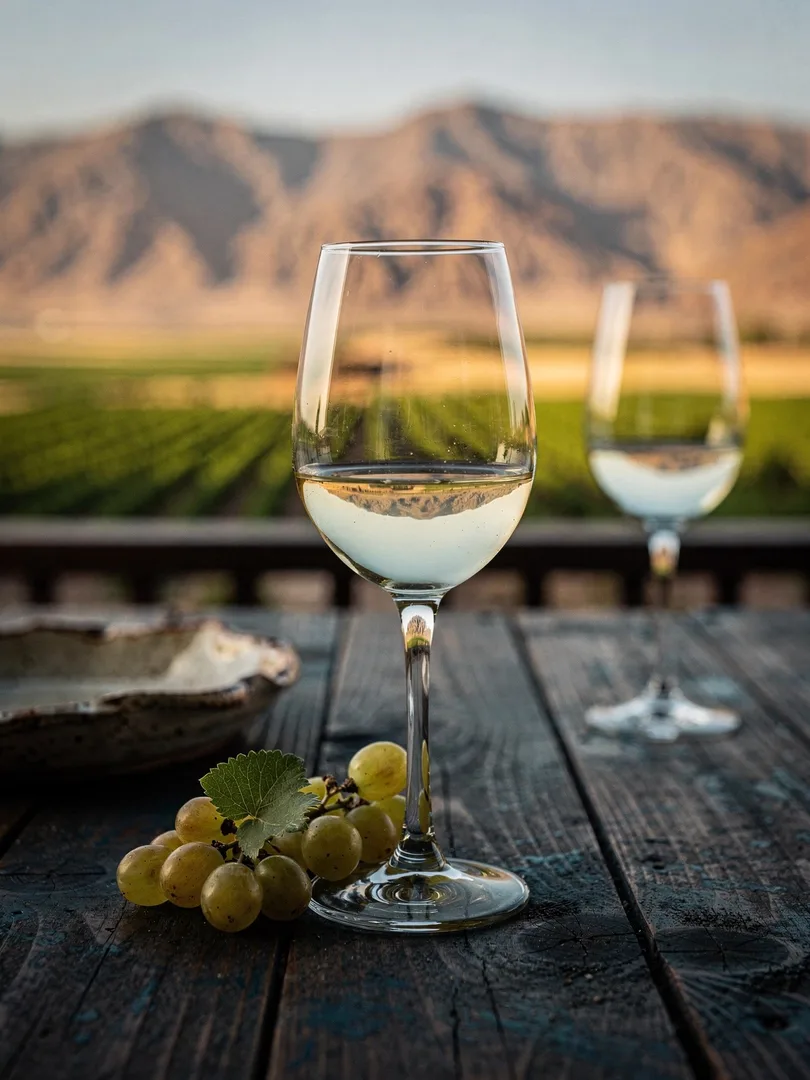
Four Tiers
Spirit Style
What distinguishes Pisco Corriente, Especial, Reservado, and Gran Pisco? The difference lies in the alcohol content: the decree sets minimum strengths, 30 proof for Corriente or Tradicional, 35 for Especial, 40 for Reservado, and 43 for Gran Pisco. Measurement follows the Gay-Lussac scale, equivalent to alcohol by volume. A tolerance of half a degree below the minimum is permitted.
What's important is what these names don't tell you. They say nothing about the grapes, since all four tiers may be made from the same thirteen varieties, and nothing about wood aging. Even a Corriente can be made from Moscatel de Alejandría. That's what the terms guarda and envejecido are for.
The Corriente, also called Tradicional, is the lowest tier and the weakest spirit the decree still allows to be called pisco. The Especial sits five proof higher, the Reservado another five above that.
Three tiers stand at the center as flagship spirits: Especial, Reservado, and Gran Pisco. All come from wine produced in the pisco zone and are distilled in batch stills.
Compared to Peruvian pisco, which is made without water reduction or wood aging, the Chilean spirit has more latitude. Water for dilution and wood aging are both permitted, with strength starting at 30 proof.
Gran Pisco, at a minimum of 43 proof, sits at the top end of the scale. In the glass, all tiers reveal the aroma of Muscat grapes first, with the alcohol content then determining how warm the spirit feels in the mouth. Mixed drinks are regulated too: a Cóctel de Pisco must be at least 4 proof, a Pisco Sour at least 12. The decree refers here to drinks produced and bottled in Atacama and Coquimbo.
Pisco EspecialWine and grape brandy · Muscat grapes of the pisco zone
- Alcohol
- 35–40 % vol
- Maturity
- 0–1 Years
Aroma of Muscat grapes and blossoms; at least 35 proof, the tier says nothing about wood aging.