Rest and Wood
Maturation & Aging
Pisco in Chile may mature in wood, but it doesn't have to. Freshly distilled spirit must rest, however: the decree requires a minimum of 60 days of reposo, resting time, after distillation, during which the aromas settle. Stainless steel tanks or wooden vessels are typically used for this. Resting isn't maturation in the strict sense, since the spirit doesn't pick up wood aromas in stainless steel.
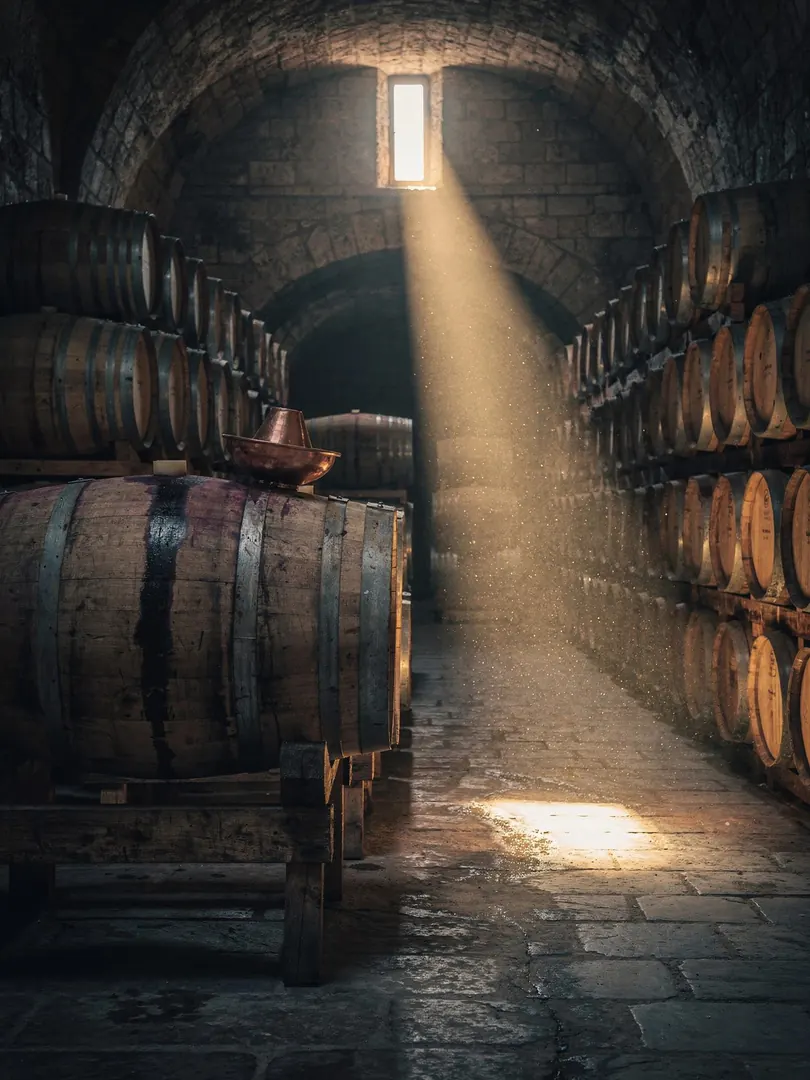
Unlike Peruvian pisco, which rests in neutral containers, the Chilean spirit may go into wood. The decree speaks of madera noble, noble wood, and ties wood aging to two terms that may appear on the label. The decree doesn't specify which type of wood is meant.
Anyone wanting to label their bottle guarda must have aged the spirit for at least 180 days in noble wood. For envejecido, meaning aged, at least 360 days are required. For both guarda and envejecido, only the time spent in wood counts, not the time in tank.
Wood can lend the spirit color and aromas, such as vanilla and spice, depending on the cask and duration. The cask itself, whether new or used, large or small, isn't prescribed. There's no minimum size for the vessels either.
The decree knows no upper limit or tiers like VS, VSOP, and XO as in Cognac. The categories Corriente, Especial, Reservado, and Gran Pisco say something about the alcohol content, not about aging time. So a Reservado can remain unoaked, while an Especial may carry the guarda designation if it spent enough time in wood.
Every distillery must keep a logbook recording the status of every batch of spirit, so the details can be verified. In the end, the choice rests with the producer: a spirit without wood shows the Muscat grape's aroma unadorned, while a spirit aged in wood appears quieter, rounder, and darker.