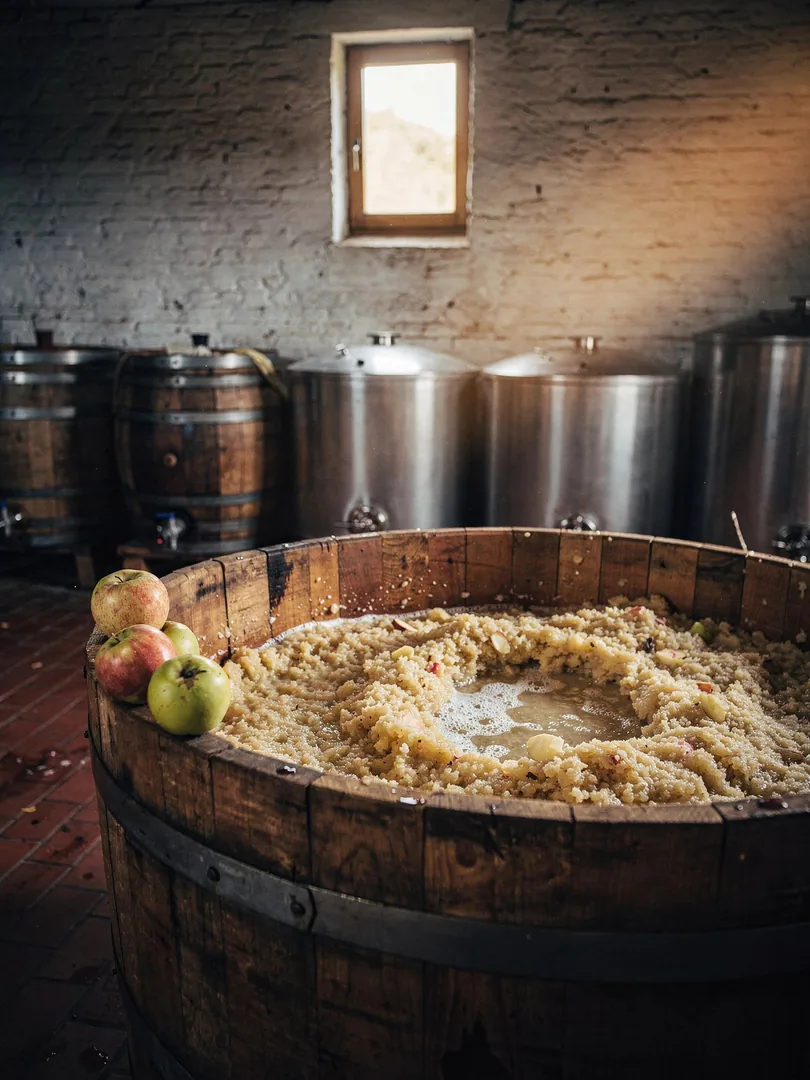
Fruit Pulp and Yeast
Mash & Fermentation
Apple brandy begins with the whole fruit, crushed and left to ferment. The resulting pulp of flesh, skin and juice is called the mash. Unlike Calvados, there's no finished apple wine at the start here, just the fruit pulp itself.
In the mash, yeast converts the fruit sugar into alcohol and carbon dioxide. Fermentation takes several weeks, and the pulp often froths during this time. Apples are naturally acidic, which offers the mash some protection against unwanted microbes, but it still needs to be kept clean and cool, or the aromas will turn.
Crushing the fruit also releases its pectin, the same compound that lets jam set. In the mash, this pectin breaks down into methanol. That's why every fruit brandy contains a trace of it, and why the EU sets upper limits.
The difference from Calvados begins right here. Calvados starts with cider pressed from cider apples and perry pears, fermented first, and only this finished apple wine goes into the still. In EU law, a brandy distilled from apple wine belongs to one category, while fruit brandy belongs to another. Sweetening limits differ too: 15 grams per liter there, 18 here.
In the Altes Land, the question of whether a dedicated mash is even worth the effort is largely an economic one. Most apples go to market as table fruit. Distilling requires tanks or barrels, space and a license, and the mash must be processed promptly. Around Jork and Steinkirchen, you'll find plenty of fruit farms but only a handful of distilleries.