Apples, Apples, Apples
Fruit & Raw Material
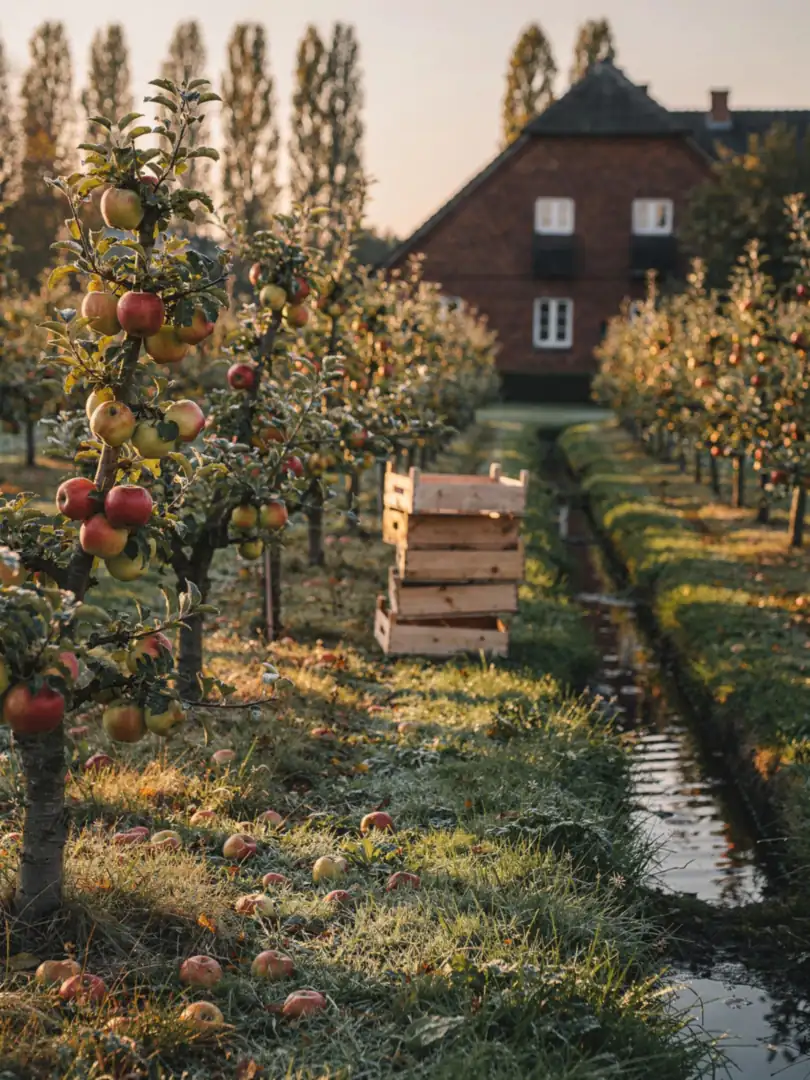
Elstar, Jonagold, Boskoop, Gala, Braeburn and Cox Orange all grow on the Altes Land's orchards, alongside the Holsteiner Cox, one of the region's heirloom varieties. The trees are kept low so the apples can be picked from the ground. Besides pome fruit, cherries, pears and plums also grow here.
The marsh soil along the Elbe is fertile, the annual average temperature hovers around 8.5°C, and blossoming begins so early that the Altländer Blossom Festival in Jork has shifted to the first weekend in May. The date was moved up because the trees now flower earlier and earlier due to the warming climate.
The Altländer Pfannkuchen, a northern German winter apple, has been cultivated since around 1840. It shows that old varieties have survived in the Altes Land, even though commercial growing has long since narrowed down to just a handful of types.
Which apples suit apple brandy best? For the distiller, appearance matters less than ripeness, sugar content and aroma, since yeast later converts that sugar into alcohol. Cox Orange is prized for its aromatic character, while Boskoop brings a fruity acidity. The riper the fruit at harvest, the more sugar it holds.
Legally, apple brandy falls under fruit brandy, where the methanol limit for apples is set at 1,200 grams per hectoliter of pure alcohol. This compound originates from the fruit's pectin rather than from faulty distilling. If pears are co-fermented and at least 85% of the mash comes from apples and pears combined, the result may be labeled Obstler.