Smell Before You Drink
Tasting
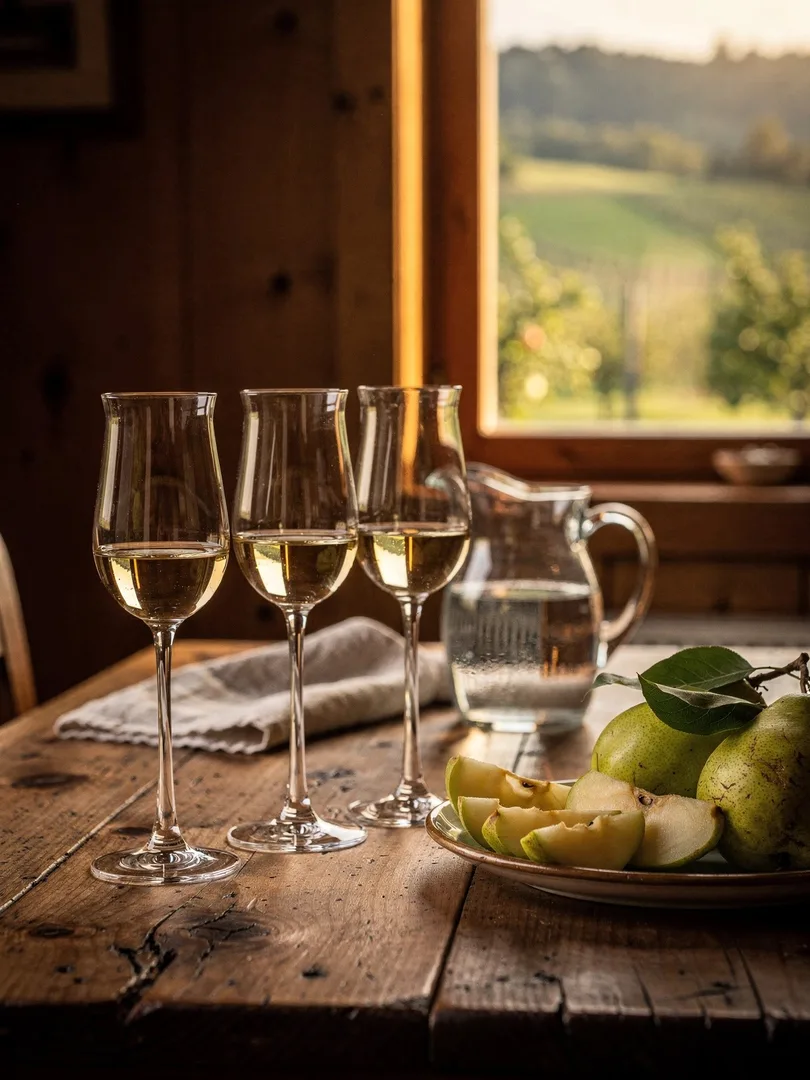
A tulip glass or a narrow-rimmed nosing glass suits Hohenloher Birnenbrand best, concentrating the aromas, while a wide-bowled glass lets them escape too quickly. Pour sparingly, one to two centimeters is enough. Bring the glass to your nose first, without swirling.
On the first sniff, look for the pear. Does it come across fresh, like a freshly cut fruit, ripe like one that's sat for a day, or more like stewed fruit? Behind that, something grassy may appear, along with a tart edge reminiscent of the standard tree.
Next, take a small sip and let it sit briefly in the mouth. Fruit brandy may contain up to 18 grams of sugar per liter, but typically tastes dry. Where the pear seems sweet, that's the aroma speaking, not the sugar. Pay attention to the finish: if the tannic note lingers for a while, that's true to form for a brandy from the Hohenlohe Plain, since the protected name explicitly calls for it.
The ideal temperature is cool room temperature. Too cold and the aromas stay closed off; too warm and the alcohol dominates. Sipping water in between keeps the nose fresh.
Pear brandies aged in wood deserve a bit more time. Nose them alongside an unaged, clear version to notice what the wood has done to the fruit. The only real measure here is your own taste, never the quantity.