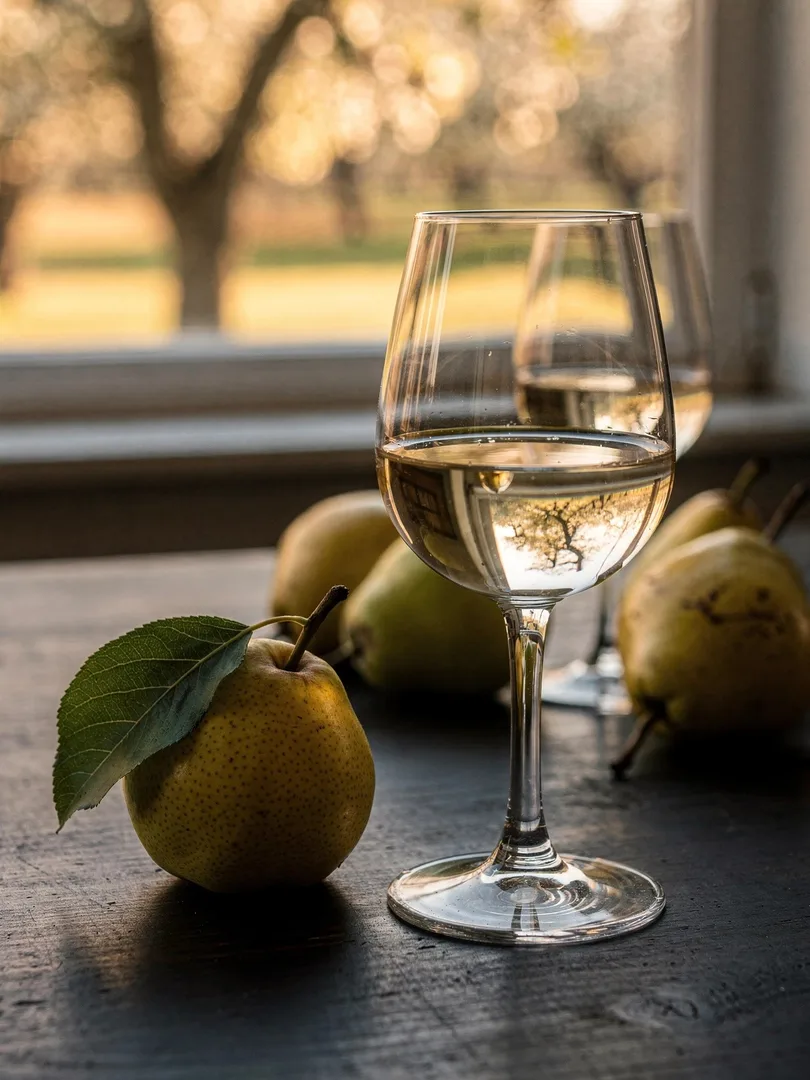
Tart, Clear, Pear-Forward
Brandy Style
Hohenloher Birnenbrand smells of ripe pear, but not sweet like pear juice. According to the product description for the protected name, there's also a clearly noticeable tannic note, a slightly tart edge that comes from the standard tree and the perry pear. On the palate it feels dry rather than sweet, with a clean, crisp nose free of frills.
Hohenloher Birnenwasser and Hohenloher Birnenbrand are the same product. Both names are protected together. Here, water doesn't signal an addition but is simply the traditional alternative term for a fruit brandy, as with Kirschwasser.
The difference from Williams-Brand lies in the variety. Williams Christ is a table pear, and its brandy is considered soft and fruity. The Hohenlohe type is tarter and a bit more rugged, much like the trees it grows on. It has more bite and less sweetness.
An Obstler is also something different. It must consist of at least 85% apples, pears, or both, with the remainder allowed to be other fruits. Pear brandy, by contrast, comes from a single fruit variety and a single region. On the label, you can recognize the authentic Hohenlohe type by its protected name. If the label just says pear brandy with no origin stated, the fruit could come from anywhere.
Once matured in a wooden barrel, the picture shifts. The color turns yellowish to brownish, the tannins gain company from the wood, and the fruit steps slightly into the background. Smelling both side by side, you quickly notice that the wood changes the character without masking the pear.
Hohenloher Birnenbrand / BirnenwasserFruit brandy · Hohenlohe Perry Pears from Standard Trees
- Alcohol
- 38–45 % vol
- Maturity
- 0–2 Years
Clear, ripe pear with a noticeable tannic note, dry and slightly tart on the finish.