Nose Before Tongue
Tasting
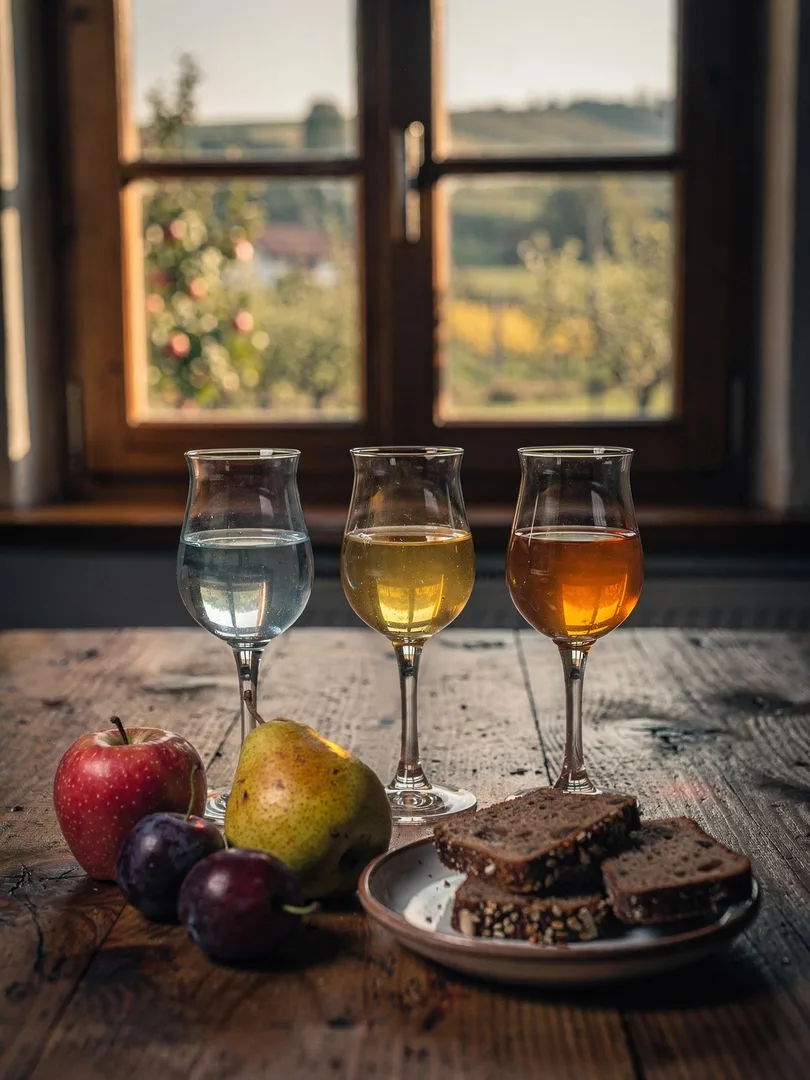
The first impression comes from a glance: Zwetschgenwasser should be clear as water, while an Obstler aged in oak may carry a hint of yellow or brown. Anything cloudy or flecked has no place in the glass.
A nosing glass or a small tulip glass with a narrow rim works best, since it concentrates the aromas, while a wide tumbler lets them escape. Serving temperature should be around room temperature, about 18°C/64°F, since cold dulls the aroma and a spirit that's too warm reads as nothing but alcohol.
The nose comes before the tongue. Smell first from some distance, since alcohol quickly numbs the nose, then move in closer. With Zwetschgenwasser, expect ripe plum, marzipan, and a fine bitter-almond note; with Obstler, apple, pear, and pale blossom. A single sip is enough—let it linger briefly in the mouth before swallowing.
A good benchmark is the Ziegler distillery from Freudenberg am Main. The house distills apples, pears, and plums from the surrounding area, by its own account, and its Freudenberger Obstbrand shows what a blended fruit brandy from the Main valley can taste like. A Black Forest Zwetschgenwasser makes a worthwhile point of comparison.
Anyone seeking a true Fränkisches Zwetschgenwasser should read the label carefully: only the full name confirms the origin, while a plain "Zwetschgenwasser" says nothing about it. Between samples, water helps reset the palate, and bread neutralizes it further.
It's instructive to compare two spirits side by side: a young Zwetschgenwasser next to one that's spent longer resting in a glass demijohn reveals how the sharpness softens and the fruit grows rounder. Brief notes on color, aroma, sweetness, and the length of the finish make the difference easier to track afterward.