Whole Stones
Mash & Fermentation
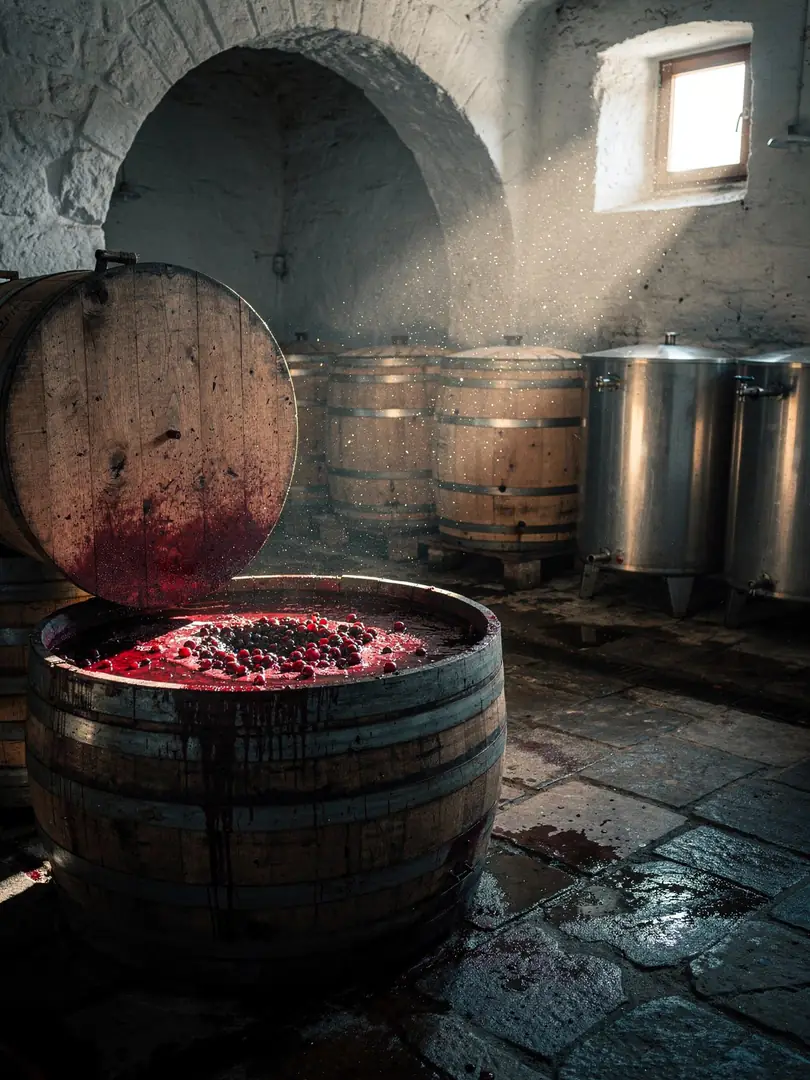
No sooner are the cherries off the tree than work begins in the distilleries from Oberkirch to the Achertal. The fruit is lightly crushed so the stones remain as intact as possible. There's a reason for this: crushed pits release hydrocyanic acid, from which ethyl carbamate, a substance considered potentially carcinogenic, can later form under light exposure. A subtle stone note is desirable; too much is a flaw. The EU sets a maximum limit of 7 grams of hydrocyanic acid per hectoliter of pure alcohol.
Then the yeast takes over. It converts the fruit sugar into alcohol; the mash turns cloudy and smells of cherries and must. To keep it from spoiling, it's usually acidified and sealed airtight. Depending on temperature, fermentation takes a few weeks. During this time the barrels and tanks sit quietly in the cellars, and the only sound is the soft bubbling of the fermentation lock.
Already in the mash, methanol forms from the pectin in the fruit skins. This isn't a distilling flaw but part of every fruit mash, which is why maximum limits exist for fruit brandies. For cherry brandy the limit is 1,000 grams per hectoliter of pure alcohol.
This is also where the line is drawn in the debate over fruit brandy versus fruit spirit. Kirschwasser contains fermented fruit, making it a fruit brandy. A fruit spirit is made differently: unfermented fruit is steeped in alcohol and then distilled. The word "water" in the name doesn't change this; it's simply a permitted alternative to "brandy."