Copper and the Heart Cut
Distilling
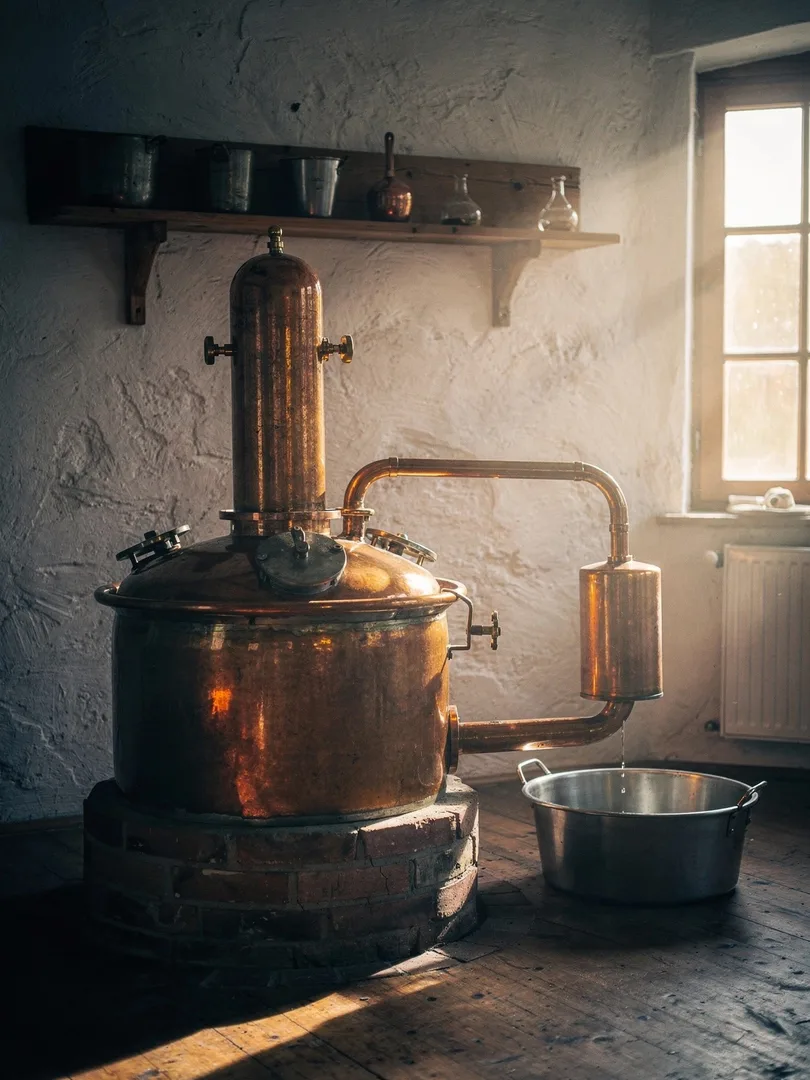
In the distillery house stands the copper still, often fitted with an attachment known as a rectifier or column. There's a reason for the copper: it binds sulfur compounds that would otherwise give the brandy an unpleasant note. As the mash is heated, alcohol and aroma compounds rise before water does. In the attachment they're purified, then turned back into liquid in the condenser. Depending on the house, distillation happens once with a rectifier or, in the classic method, twice.
The brandy comes out of the condenser in three stages. The heads smell of solvent and are cut away. The tails taste fusel-like and are likewise cut away or redistilled. Only the heart, the middle cut, makes it into the bottle. Distillers rely less on clock and thermometer here than on nose and tongue. Where the cut falls between stages is a matter of experience and shapes each house's signature. Two distilleries can process the very same cherries and still bottle two different brandies.
It's a common misconception that the distiller discards everything harmful with the heads. Methanol is distributed throughout the entire distilling process and can only be partially separated out. That's why the EU sets maximum limits. Danger comes only from adulterated alcohol, not from a legally produced fruit brandy from the Ortenau.
In the Abfindungsbrennereien of the Renchtal and in Kappelrodeck, the alcohol isn't measured. The customs office calculates it from the quantity of fruit and an official yield rate, and every distilling run must be registered in advance. What's everyday practice on the farm, with permission, remains forbidden for everyone else.