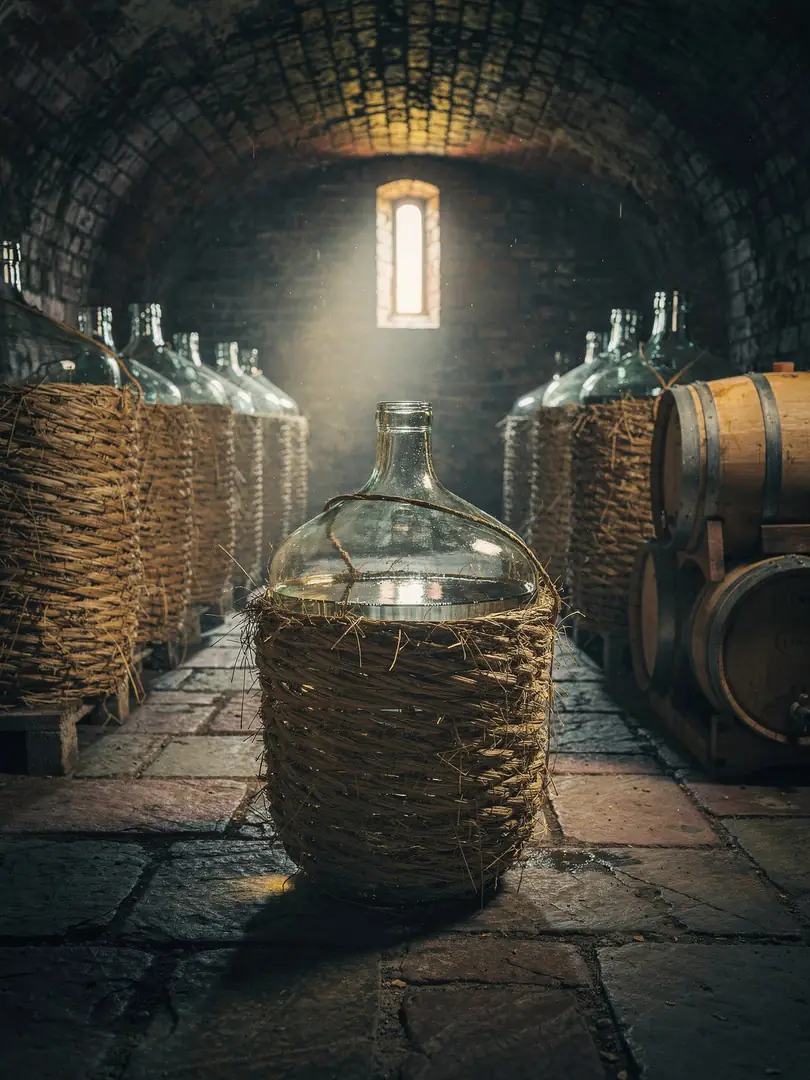
Rest in the Glass Demijohn
Maturation & Storage
Fresh off the still, Kirschwasser is sharp and unrefined. It's therefore left to rest, usually in large glass demijohns or stainless steel tanks, in earlier times also in stoneware. These vessels impart nothing to the brandy. The fruit aroma stays intact, and the spirit remains crystal clear. In the cellars of the Renchtal farms, the demijohns often stand in rows, each one for a particular variety or vintage.
How long the resting period lasts is up to each house, ranging from weeks to years. The cellar should be dark, since light can cause the hydrocyanic acid in the finished brandy to form ethyl carbamate. During storage, the rough edges soften and the aroma comes into balance. Some distillers deliberately let part of a vintage rest longer, to use it later in a blend.
Wood is permitted for fruit brandies, such as oak, ash, or acacia. After at least one year in wood, the color may be adjusted with caramel coloring; otherwise coloring is forbidden. A Kirschwasser aged in wood tastes softer and smells of vanilla and spice, but it remains the exception.
Before bottling, the brandy is brought down to drinking strength with softened water. The EU minimum is 37.5% ABV, though retail bottles are usually 40% or higher.
An age statement may only refer to the youngest component. If "old" or "Reserve" appears on the label, it's a claim made by the producer, not an EU classification like those used for Cognac. The Heimatkirsch 1726 from Oberkirch is a blend that brings together brandies from several distilleries across the region.