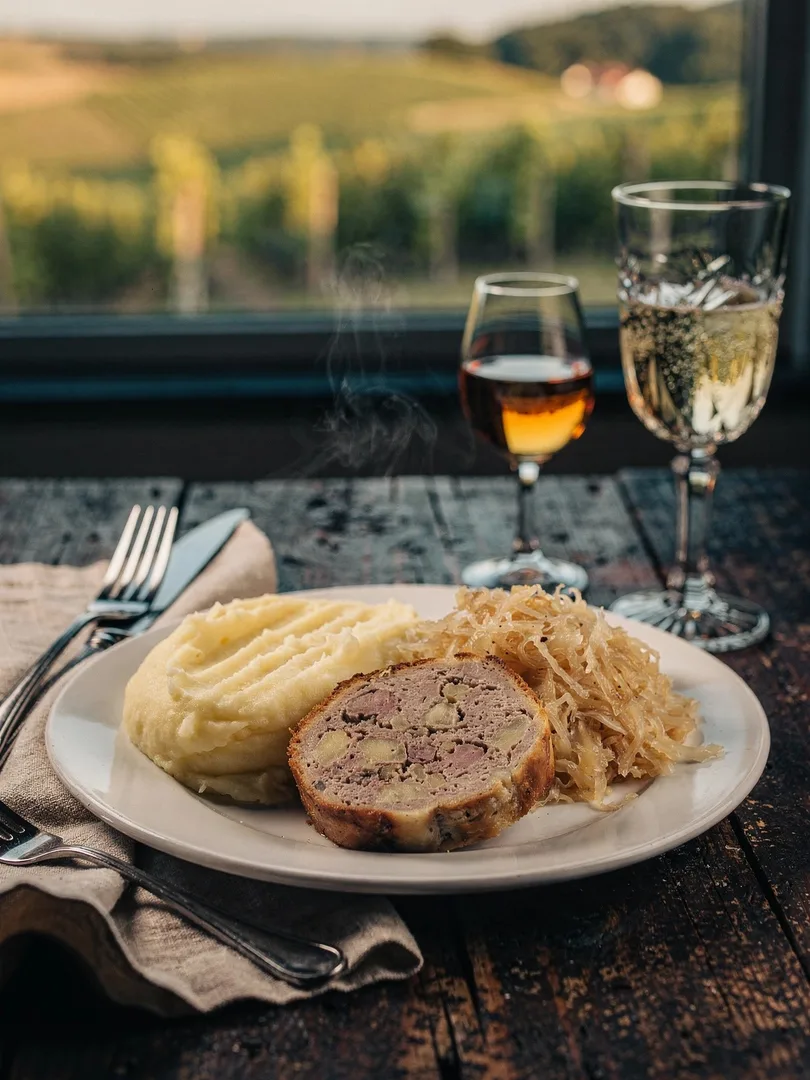
Saumagen and Dampfnudeln
Food & Tradition
Weck, Worscht und Woi is the simplest snack of the Pfalz and Rheinhessen: a bread roll, a thick slice of Fleischwurst or liver sausage, and a quarter liter of wine served in a Dubbeglas, the half-liter glass with its characteristic dimpled pattern. Where wine is as much a daily staple as the bread roll, it's no surprise that brandy distilled from wine feels right at home here too.
Hearty fare fills the table. Pfälzer Saumagen with sauerkraut became famous across Germany thanks to Helmut Kohl, alongside liver dumplings and potato soup with plum cake. In Rheinhessen and the Pfalz, people also serve Spundekäs, a spiced fresh cheese with paprika, alongside pretzels or bread. Things turn sweet with Dampfnudeln served in wine sauce.
Clear, dry pomace brandy pairs better with hearty food than you'd expect, since its spiciness cuts through the richness. Mild brandy suits sweeter dishes better, such as Dampfnudeln, where oak and caramel notes meet yeasted dough and wine sauce. In many winegrowing households, a small glass from the family's own production rounds off the meal, whether brandy or pomace brandy from the farm distillery.
In autumn, villages celebrate Kerwe, the church consecration festival, with Federweißer, the still-fermenting grape must, and onion tart. In September, Bad Dürkheim hosts the Dürkheim Sausage Market, a major wine festival complete with Dubbegläser. The German Wine Route passes by many of these celebrations.
In Straußwirtschaften, as the Pfalz and Rheinhessen call their seasonal estate taverns, winegrowers pour their own wine at certain times of year. Bread, sausage, and cheese accompany it, and guests often sit in the courtyard among casks and vines, while behind the house the vineyards climb up the slope.