Gold and Oak
Tasting
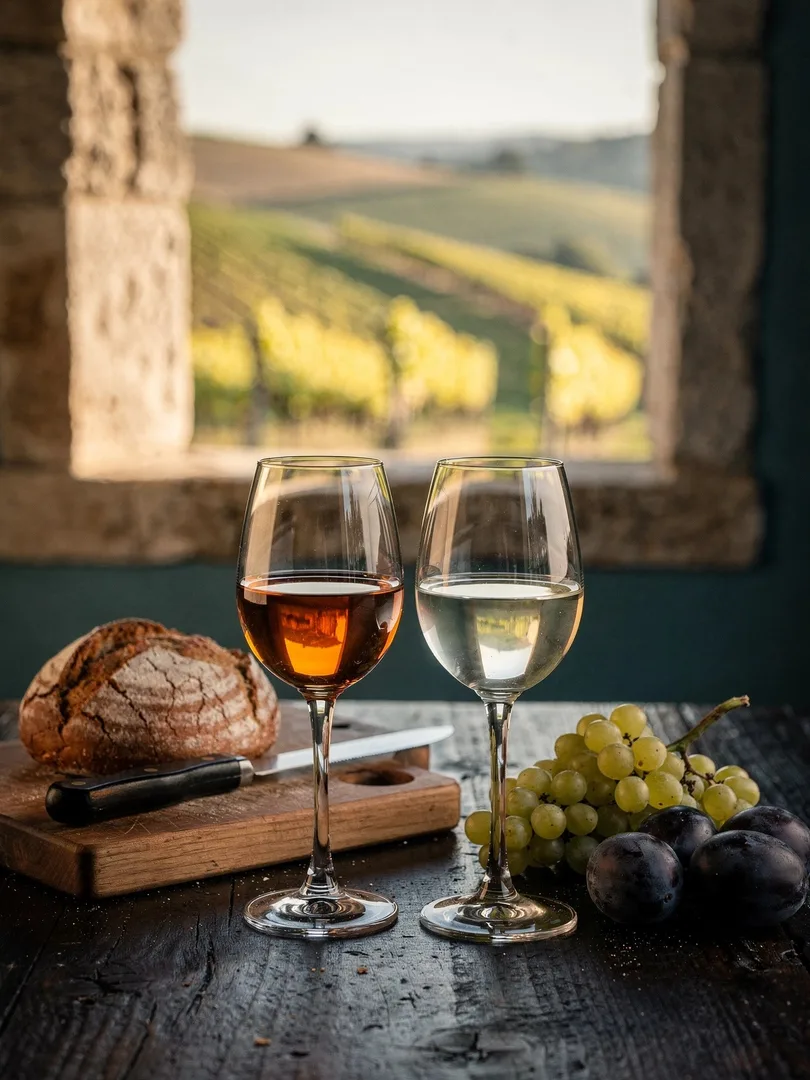
A glass of Pfälzer Weinbrand looks calm: clear, golden yellow to golden brown, with no cloudiness. The specification describes its aroma and taste as mild and smooth, carrying the fruit of the Pfalz vineyards along with the notes left behind by the wood. When tasting, first look at the color, then the aroma, and finally the flavor.
A nosing glass or a small tulip-shaped glass that narrows toward the top helps capture the aromas. Pour just a finger's width. Swirl the glass briefly, and a drop of water can sometimes open up the nose. The brandy shouldn't be cold; at room temperature, around 16 to 20°C (60 to 68°F), the aromas express themselves best.
For comparison, brands that grew large in this region make a good reference point. Chantré describes itself as a mild brandy, and Mariacron from Oppenheim is also among the well-known German brands. Nosing both side by side reveals just how far a commercial brandy can stand apart from Pfälzer Weinbrand with its strict rulebook.
Pomace brandy from a licensed Pfalz farm distillery carries aromas of grape skins, seeds, and a touch of herbs. On the palate, it feels drier and more angular than brandy. It can be served a touch cooler so its spiciness doesn't turn too sharp.
Between samples, water and a piece of bread help keep the nose fresh. Small amounts are enough when tasting, since it's about aroma and flavor, not quantity.