White Wine and Pomace
Fruit & Raw Material
Rheinhessen unfolds as gentle hill country between Mainz, Bingen, and Worms, while the Pfalz stretches along the Haardt Mountains beside the German Wine Route all the way to the French border. Both landscapes live by wine. That's why brandy and pomace brandy take center stage here, rather than kirsch or fruit schnapps.
The raw material for Pfälzer Weinbrand is white wine from the Pfalz wine region. The specification governing its protected status cites Müller-Thurgau as an example of a typical grape variety. The wine best suited to distilling isn't the kind meant to shine in a glass, but a lean, acid-driven wine with little character of its own. Distillation concentrates everything, including the acidity, and a broad, heavy wine would turn clumsy.
There's also pomace, the term for the skins, seeds, and stems left over after the grapes are pressed. Winegrowers with a licensed farm distillery turn this into pomace brandy, known as grappa in Italy and marc in France. Only those running an agricultural operation with at least 1.5 hectares of vineyard or intensive fruit cultivation are granted a license.
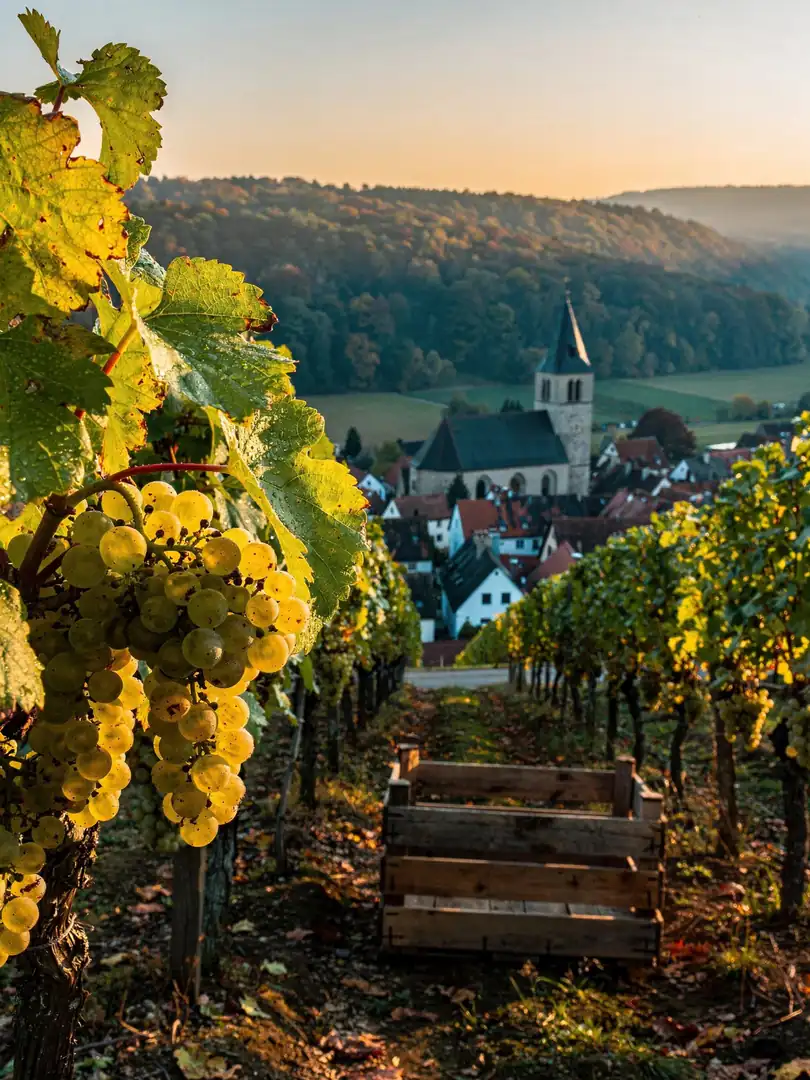
The harvest begins in late summer and stretches into autumn. The timing of the picking shapes the wine's character. Grapes picked early bring more acidity, while those picked late bring more sugar and therefore more alcohol in the wine. The distiller values acidity, while the winegrower selling wine by the glass often prizes body instead. Both qualities grow on the same hills, and so every brandy finds its own harvest.