Wine, Pomace, Yeast
Mash & Fermentation
With brandy, there's no mash in the strict sense. The raw material is finished wine. The winegrower presses the grapes, lets the must ferment into wine with yeast, and either delivers this wine to the distillery or distills it himself. Yeast handles the fermentation, converting the grape sugars into alcohol and carbon dioxide, a process that can take weeks depending on the cellar.
For Pfälzer Weinbrand, the specification simply requires wine or distilling wine from the Pfalz region, such as Müller-Thurgau. Distilling wine is wine fortified with alcohol. Such a wine is often harsh and plain to drink, which makes it particularly well suited to distilling.
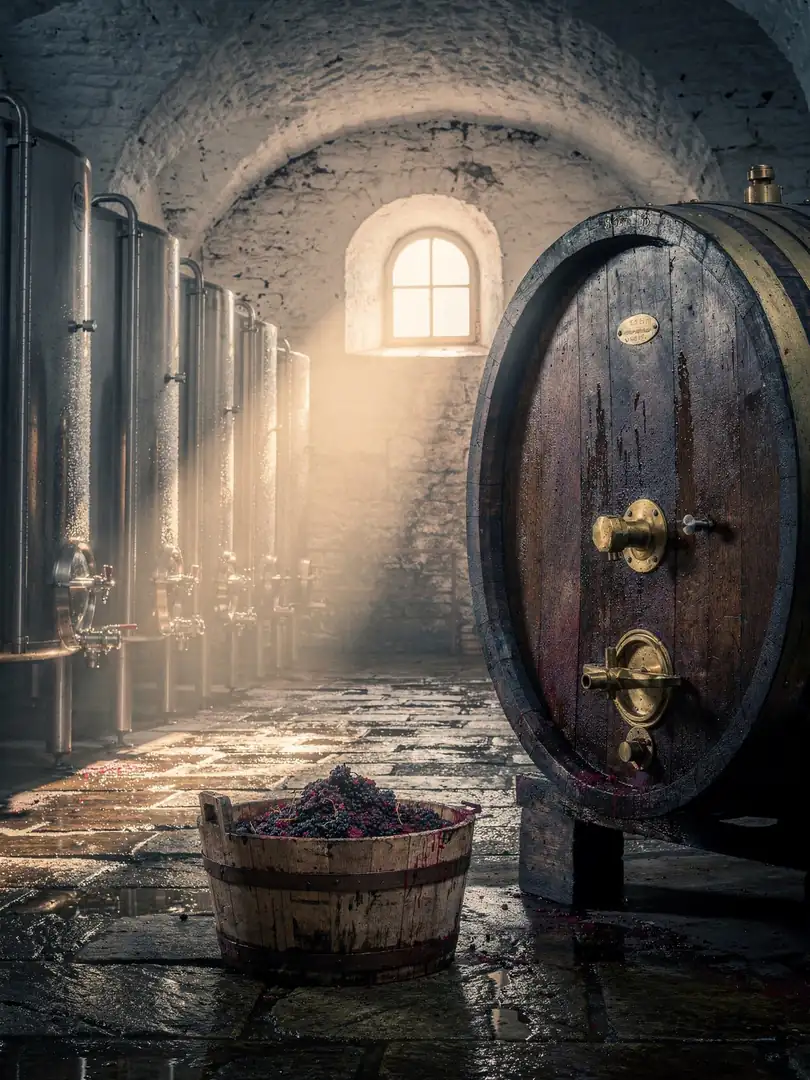
Pomace brandy works differently. Red wine ferments on the skins, so the pomace is already fermented by the time it's separated out. White wine, by contrast, is pressed before fermentation begins, leaving sugar still in the pomace. It's then stored in sealed containers where it ferments, cut off from the air so it doesn't develop mold or turn to vinegar.
The methanol limit shows why pomace sits under a different legal framework. Methanol forms from pectin, a substance in the fruit's cell walls, during fermentation itself. The EU permits a maximum of 200 grams per hectoliter of pure alcohol for brandy, but 1,000 for pomace brandy. Skins and seeds simply contain far more pectin than clear wine.
The fermented mass isn't yet a drink. It smells sharp, of fermentation, yeast, and skins. Only distillation separates what should remain from what should be left behind.