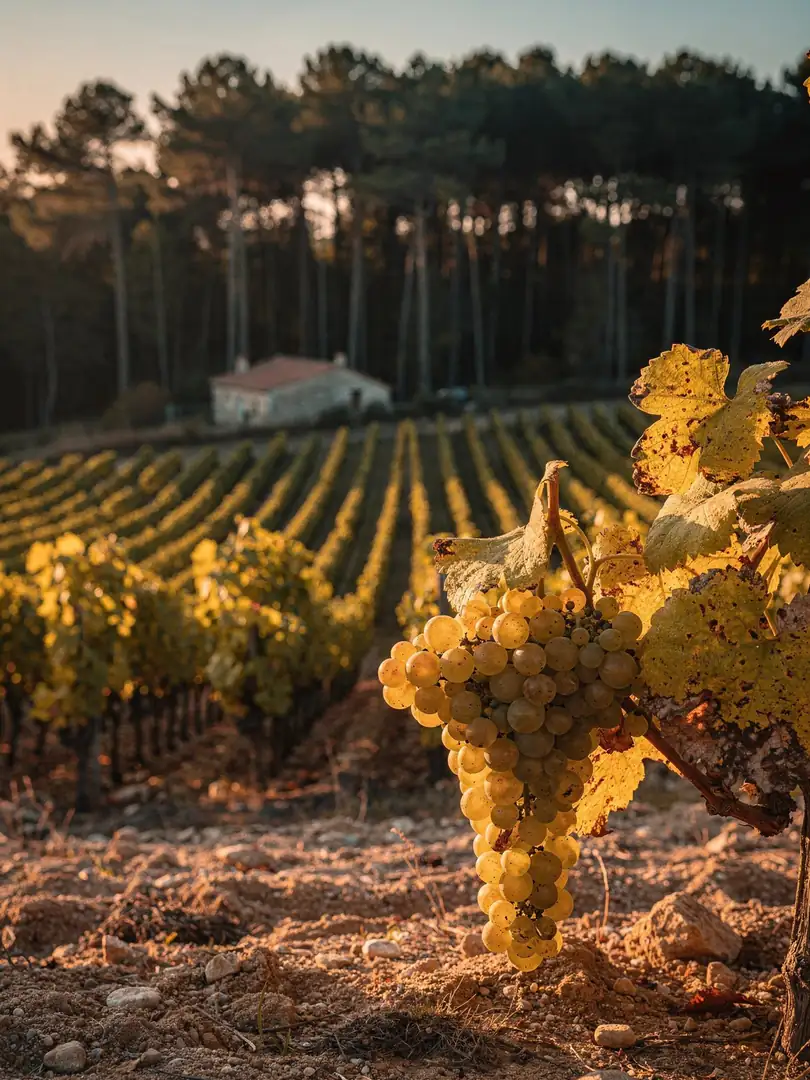
Vines in the Sand
Fruit & Raw Material
Armagnac is a brandy distilled from wine, and the grape variety in the glass shapes its character. Ten varieties are permitted, including Baco blanc, Colombard, Folle blanche, and Ugni blanc. Four of these give the brandy its personality, while the remaining six, such as Mauzac or Jurançon, play a supporting role.
Ugni blanc delivers acidity with low alcohol, exactly what's needed in a wine destined for distillation. It's considered the quintessential distilling grape and is also the backbone of Cognac. It replaced Folle blanche, which was the dominant grape of Gascony until the phylloxera crisis of 1878. The delicate variety hasn't disappeared entirely, though: Château du Tariquet near Eauze bottles single-varietal Folle blanche brandies, prized for their floral, delicate character.
The answer to phylloxera came from the Landes. In 1898, schoolteacher François Baco crossed Folle blanche with the American hybrid vine Noah, creating Baco blanc, formerly known as Baco 22A. It thrives in the sandy soils of the region and produces brandies with plenty of structure.
Colombard adds spicy notes. Many plots sit on fine, yellowish sand known locally as sables fauves, and the landscape feels patchwork-like: vine parcels alternate with meadow, farmland, and forest. Pine woods stand between them, slowing the wind and giving the land its Atlantic touch.
Why use wine as the raw material? Gascony is wine country, and a high-acid, low-alcohol wine yields a refined distillate. Château de Laubade in Sorbets reportedly grows all four classic varieties on a single 105-hectare plot.