Base Wine Without Sulfur
Mash & Fermentation
An Armagnac doesn't begin with a mash, but with a finished white wine. The grapes are pressed, the must ferments, and what remains in the tank afterward is a lean, acid-driven wine that would seem austere as a table wine. For the distiller, though, it's exactly right. This is what sets it apart from fruit brandies: there are no pits, no stones, and no fruit pieces floating in a mash, just a clear liquid.
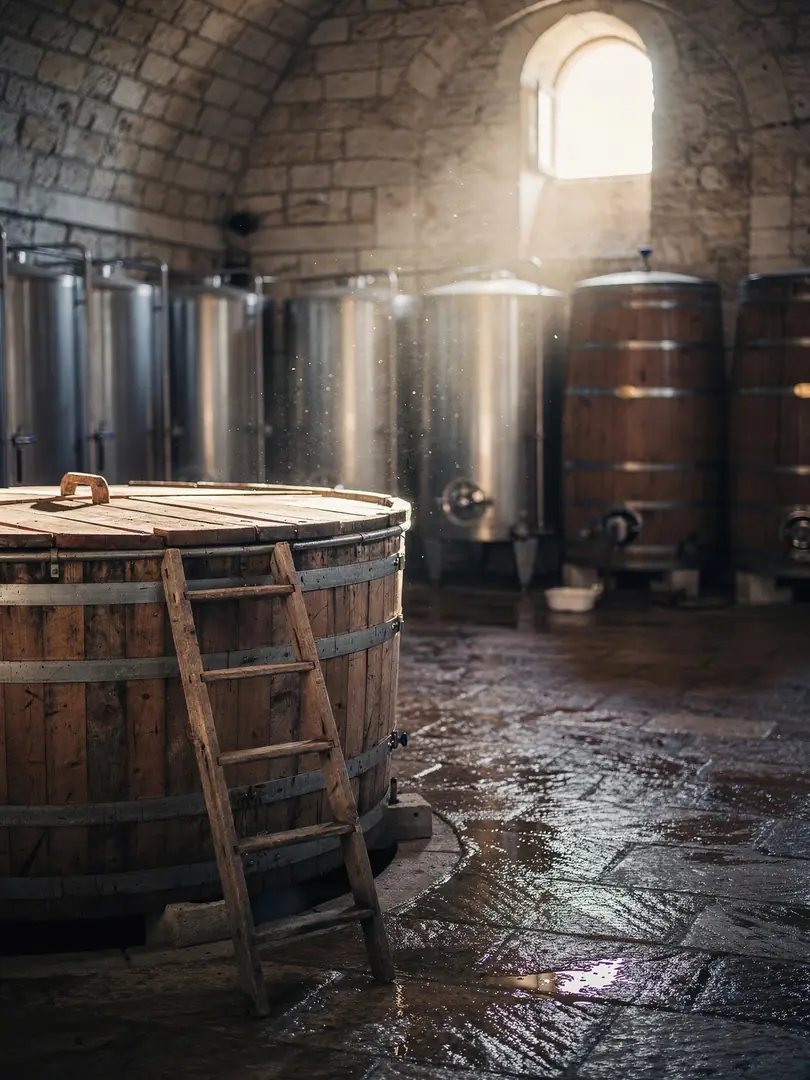
What's notably absent is sulfur. The appellation's specifications allow no added sulfur, tolerating only what the wine naturally produces. The wine must therefore arrive in the tank healthy and clean, since a wine without this protection has little room for error.
Yeast converts the sugar in the must into alcohol until the wine is dry. How long this takes depends on the vintage and the cellar. With Ugni blanc, the alcohol level naturally stays low while acidity remains high, both considered advantages for the eventual distillate.
Distillation only begins after harvest, once the wine is ready. Until then, it rests in the tank. On small estates, a traveling distiller arrives with mobile equipment, the alambics ambulants; larger estates have their own distillery. In 2012, 185,000 hectoliters of distilling wine passed through the stills across the entire appellation.
The choice of wine also determines whether a vintage expression will follow. A Millésime comes from a single harvest and is never blended with other years. Anyone wanting to bottle a vintage Armagnac must therefore keep that year's wine separate, from tank all the way to barrel.