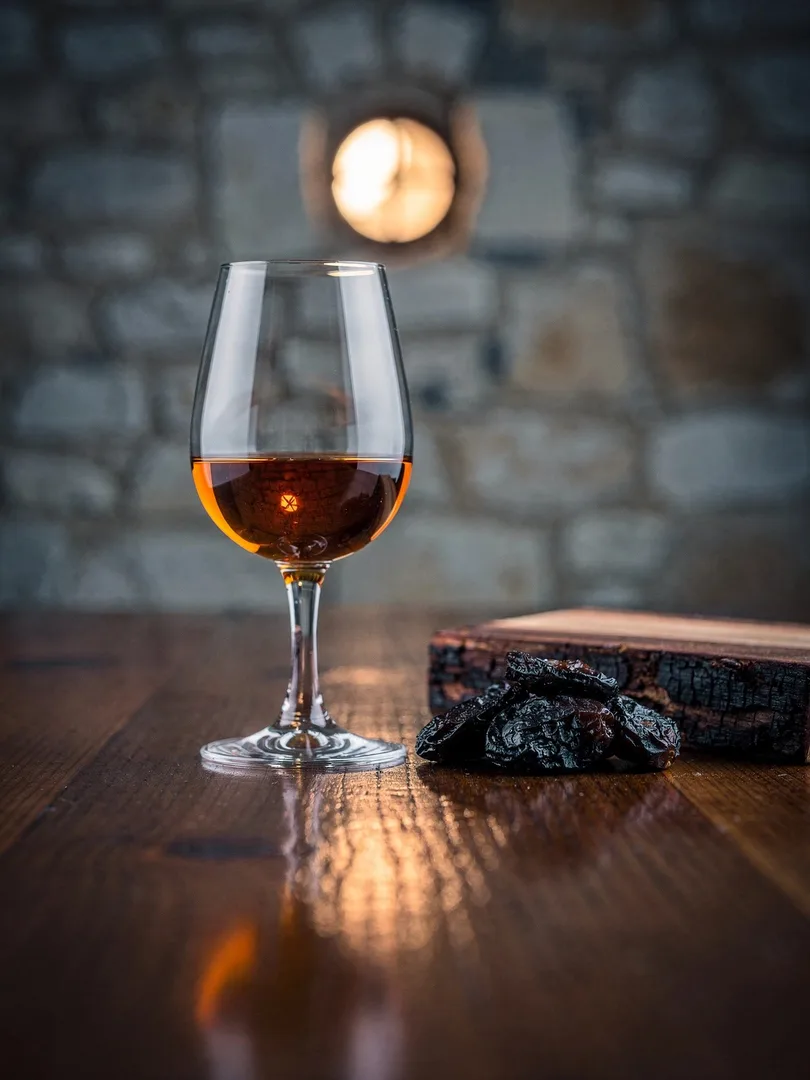
Plum, Vintage, Folle
Spirit Style
What distinguishes Bas-Armagnac from Armagnac made in Ténarèze? Bas-Armagnac is generally considered the fruitier, softer style, with notes of dried plum and baked fruit, while Ténarèze is seen as more robust. These are common characterizations rather than legal rules: in the end, what matters in the glass is grape variety, vintage, and barrel.
The blend of grapes shapes the style. Ugni blanc contributes acidity and freshness, Baco blanc brings structure, Folle blanche adds floral notes, and Colombard contributes spice. Brandies with a high proportion of Baco are considered dense and powerful. Each house decides its own blend ratios. A blend of multiple grape varieties and vintages forms the foundation of most age-stated bottlings.
Single-varietal bottlings remain the exception. Château du Tariquet near Eauze produces an Armagnac made entirely from Folle blanche, available in eight-year and 25-year expressions.
The second face of Bas-Armagnac is the vintage. A Millésime comes from a single harvest and isn't blended with other years. Darroze bottles spirits from individual estates separately, including a 1974 from Domaine de Lamarquette said by the merchant to be made entirely from Baco.
A vintage is not the same as an age statement. It indicates the year of harvest, not the time spent in barrel: how long the spirit then aged in wood and glass demijohns only appears on the label if the house chooses to state it. A Millésime can therefore be young or very old, and both have their admirers.
Three signature styles are outlined in the profile below: the classic blend, the vintage, and the single-varietal Folle blanche Armagnac. The ranges describe typical bottlings and aren't official regulations.
Bas-ArmagnacWine and grape brandy · Ugni blanc, Baco, Folle blanche
- Alcohol
- 40–45 % vol
- Maturity
- 1–25 Years
Amber-colored, with dried plum, vanilla, and spice, round and soft on the finish.