Glass and Temperature
Tasting
What does Armagnac taste like? A young Bas-Armagnac smells of dried plum, orange, and vanilla, with a warm, rounded feel on the palate. With age, notes of tobacco, leather, and what connoisseurs call Rancio emerge, a nutty, spicy aged character reminiscent of old barrels and cellar air.
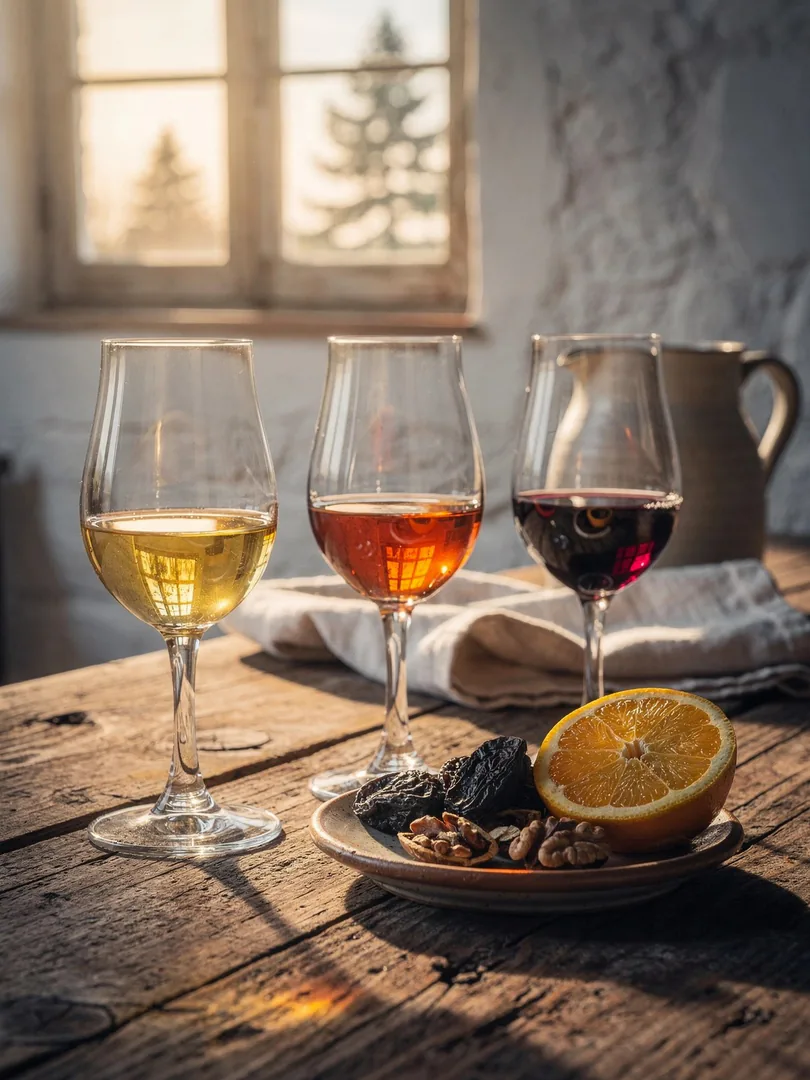
For Armagnac, use a nosing glass or a tulip-shaped glass that narrows toward the top and concentrates the aromas. A wide, open-bowled glass lets the alcohol rise too strongly, masking the subtler notes.
On the palate, a young spirit first tastes fruity and warm, then the oak comes through with a hint of bitterness. With very old vintages, the balance shifts toward dried fruit, spice, and a long, soft finish that can linger for minutes.
Serve at room temperature; holding the glass for a while will warm the spirit slightly anyway. A single drop of water can open up the aromas, particularly in bottlings around 50 percent ABV.
Three addresses are worth exploring for comparison. Darroze in Roquefort bottles spirits from individual estates separately. Château de Laubade in Sorbets releases vintages, with a 1945 occasionally appearing on the market. Château du Tariquet near Eauze offers single-varietal Folle blanche at strengths from 47.5 to 50.5 percent ABV. All three are just examples, as market availability changes constantly.
First, nose the glass, then hold a small sip in your mouth and swallow slowly. After a minute, it's worth smelling the empty glass, since the heavier aromas often linger there. At 40 percent ABV and above, a small glass can last many minutes.