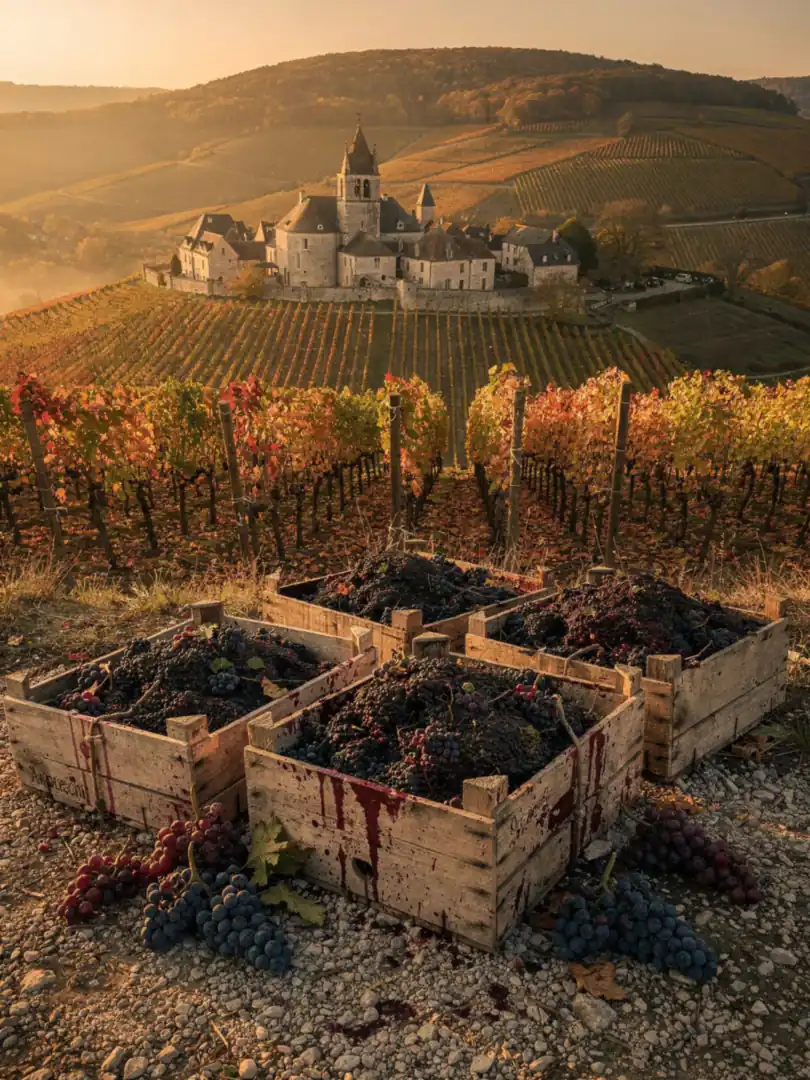
Pomace, Not Fruit
Fruit & Raw Material
What's left under the wine press is a solid cake of skins, seeds and stems. This is the pomace, called marc in French, and it carries the scent of the wine it came from. The skins contribute colour, tannins and aromas that don't fully transfer into the must during pressing.
Whether sugar remains in the pomace depends on the colour of the wine. Red wine is pressed only after fermentation, so its pomace has already fully fermented. White wine, on the other hand, usually goes into the press while still fresh, meaning its pomace still contains sugar that ferments afterward. Either way provides raw material for a pomace brandy; only the path to distillation differs.
For Marc de Bourgogne, the pomace may come from red, white or mixed grapes. The list of permitted varieties includes Aligoté, César, Chardonnay, Gamay, Melon, Pinot Noir, Pinot Gris, Pinot Blanc, Sacy, Sauvignon and Tressot. Anyone expecting only Chardonnay and Pinot Noir will also encounter César, Tressot and Sacy, old varieties from the Yonne département.
In Champagne, pomace for Marc champenois may only come from within the protected growing area of the Champagne appellation. There, the dominant varieties are Chardonnay, Pinot Noir and Pinot Meunier, the same grapes used to make the sparkling wine itself.
Jura and Savoy source their pomace from their own wines—in the Jura from grapes like Savagnin and Poulsard, in Savoy from Jacquère and Mondeuse. Both regions use their own protected name for their marc, so the raw material always comes from within the region itself.
Why distill from pomace at all? Because it's already there, and because the skins hold aromatic compounds that the brandy absorbs. Burgundy's trade body describes its marc as robust, with pronounced tannins.