Two Years in Oak
Maturation & Storage
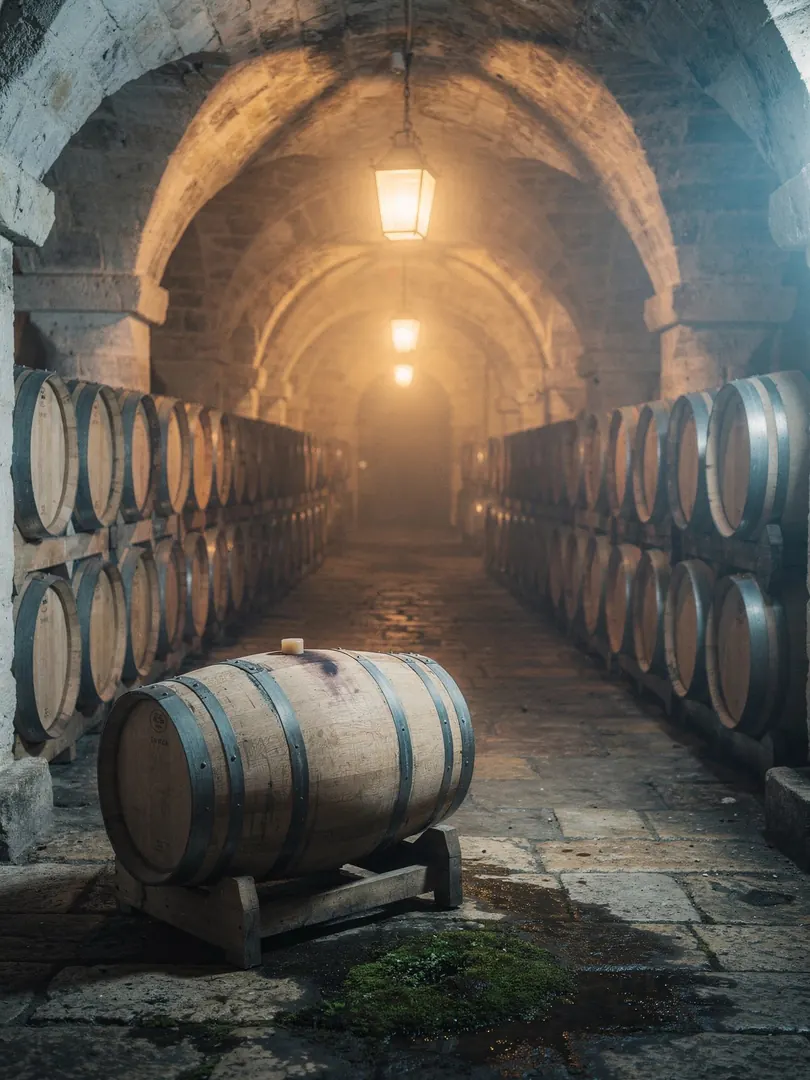
Freshly distilled marc is crystal clear and sharp; its colour comes entirely from the wood. For Marc de Bourgogne, the appellation therefore requires at least two years in oak, either in 228-litre barrels or in larger vessels holding several hectolitres. Maturation, too, must take place within Burgundy.
Those who wait longer are entitled to say so. After three years the marc is called "vieux," after six "très vieux," and after ten "hors d'âge." Under EU law, any age statement refers to the youngest component in the blend, which calls for patience when blending across multiple vintages.
Fine de Bourgogne must rest uninterrupted in oak vessels for at least three years, counted from the day it enters the wood. That exceeds the EU minimum for brandy, which starts at one year in large barrels or six months in small oak casks.
Champagne follows two paths. White marc rests in tank for at least three months after distillation before being sold. Aged marc spends at least 24 months in oak vessels holding no more than ten hectolitres. At the point of sale, it must be at least 40% ABV.
In the Jura, wood ageing is mandatory for Marc du Jura, which explains why the region's brandies are amber in colour. Marc de Bourgogne is likewise described by the trade as deep gold-amber, a mark of its years in oak.
Oak imparts vanilla, spice and tannins, and allows a touch of oxygen to reach the brandy, softening its sharpness. The smaller the barrel relative to its contents, the stronger the influence of the wood, since more brandy is in contact with more wood.