Copper and Steam
Distillation
Pomace is solid and crumbly, which makes distilling it demanding. EU regulations therefore allow it to be distilled directly with steam or after the addition of water. What matters is that the pomace is present in the still during the first distillation, since that's where the distiller draws out the aromas from the skins.
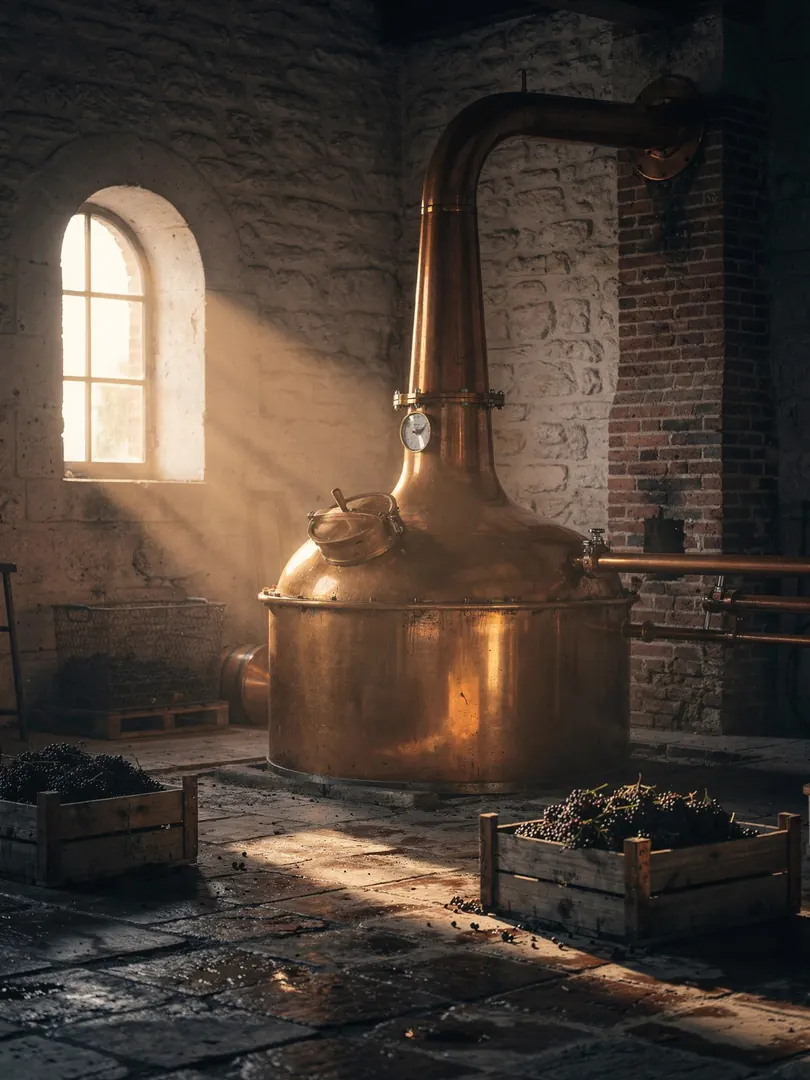
For Marc de Bourgogne, the specifications require a copper still. The trade association describes it as a four-part apparatus consisting of the kettle, cap, swan neck and condenser. In the kettle, alcohol rises together with the aromas as vapour; in the condenser, it turns back into liquid.
The distillate may leave the still at no more than 72% ABV. For sale, it's later diluted with water down to drinking strength, with a minimum of 40% ABV required in the glass. As with Cognac, there's a cutoff date here too: 31 March following the harvest. Distillation takes place within the Marc region, since storage, distillation and maturation are all bound together under the appellation.
As with any brandy, the distillation run splits into three parts. The heads at the start smell sharp and solvent-like, the tails at the end are heavy and oily, and both are cut away. What goes into the bottle is the heart, the middle run. Methanol forms from pectin and is already present in the pomace; cutting the run only partially reduces it, which is why EU law sets maximum limits.
In the Jura, the INAO lists a column still fitted with Raschig rings as the traditional method. These are small packing rings inside the column that increase the surface area where vapour and liquid meet. This concentrates the alcohol before the vapour reaches the condenser. Whether pot still or column, Marc du Jura is then matured in wood.