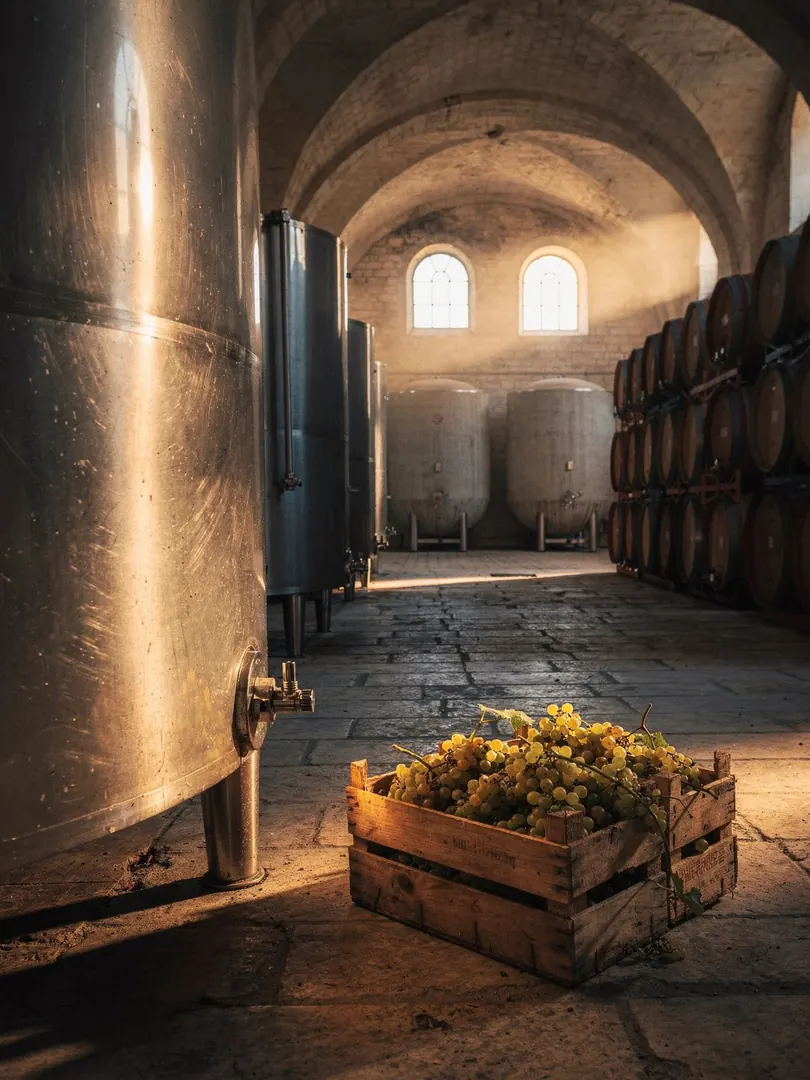
Fermentation in Tank
Mash & Fermentation
Strictly speaking, there's no mash in Cognac production, since only the pressed juice of white grapes is fermented. Skins and seeds play no part. The finished wine is the base wine, which is first turned into brouillis in the pot still, a thin initial distillate.
Harvest begins in autumn, and from that point everything runs against the clock. The juice goes into stainless steel or concrete tanks, where yeasts convert the sugar into alcohol. Depending on the estate, growers rely on the natural yeasts from the grape skins or add cultured yeasts. After a few weeks fermentation is complete, and the must has become a dry, tart white wine.
This wine isn't meant for the table. It's high in acidity, low in alcohol, and typically goes without any addition of sulphur. Tasted on its own, it comes across as sharp, almost devoid of fruit, and no one would think to pour it with a meal.
The wine isn't bottled but waits in tank until the still becomes free. The window is tight, since everything must be distilled by 31 March following the harvest. This date sets the rhythm of winter at every estate.
How does this differ from a fruit-brandy mash? With kirsch or quetsche, crushed fruit, flesh, skin and all, ferments in a vat, and the whole mass later goes into the still. With Cognac, only liquid enters the pot, no flesh and no skins.
Even though the wine seems undrinkable, it's checked carefully, since faults from fermentation become concentrated in distillation and show up more clearly there. That's why growers pay close attention to healthy grapes and clean tanks. Those who work this way get out of the still exactly what they put into the tank.