Pineau and digestif
Food & Tradition
At the start of a meal in the Charente, it's often not Cognac that appears, but Pineau des Charentes. It's made by adding Cognac to grape must, which halts fermentation and leaves behind a sweet, chilled aperitif. The region's brandy thus appears on the table before the first course, just in a different form.
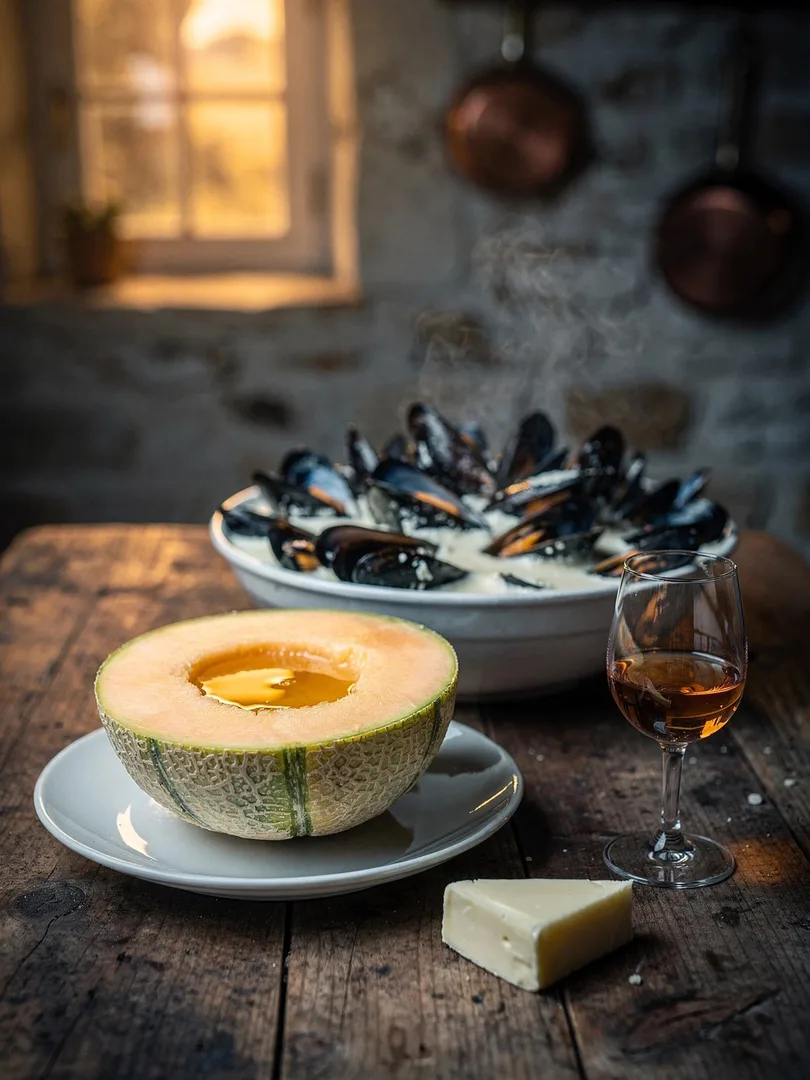
At home, there's melon charentais, the small, fragrant melon whose core is hollowed out and filled with Pineau. From the coastal region comes mouclade, mussels in a creamy sauce, often made with Pineau and a touch of curry. Both taste of the sea and of wine, just like the region itself.
Alongside these come cagouilles, garden snails, a well-known specialty of the Charente, and Beurre Charentes-Poitou, a protected butter from the region found in the sauces. Dishes like these don't need brandy, but they show that the local cuisine thinks in terms of wine, cream and butter, just like Cognac itself.
Cognac is brought out after the meal, as a digestif, in a small glass alongside coffee. Dark chocolate, walnuts and ripe fruit pair well with the honey and dried-fruit notes that aged brandies bring. Spiced or very sweet desserts, on the other hand, overwhelm the delicate aroma of the Grande Champagne.
In winter, the villages around Segonzac smell of warm copper and yeast, as the distilling season is underway. The stills stay fired up until 31 March after the harvest, and the scent drifts from the distilleries across the farmyards. Standing in the cellar, you might hear the quiet creak of the casks, while the part des anges, the angels' share, silently continues to evaporate.