Blossom, apricot, nut
Tasting
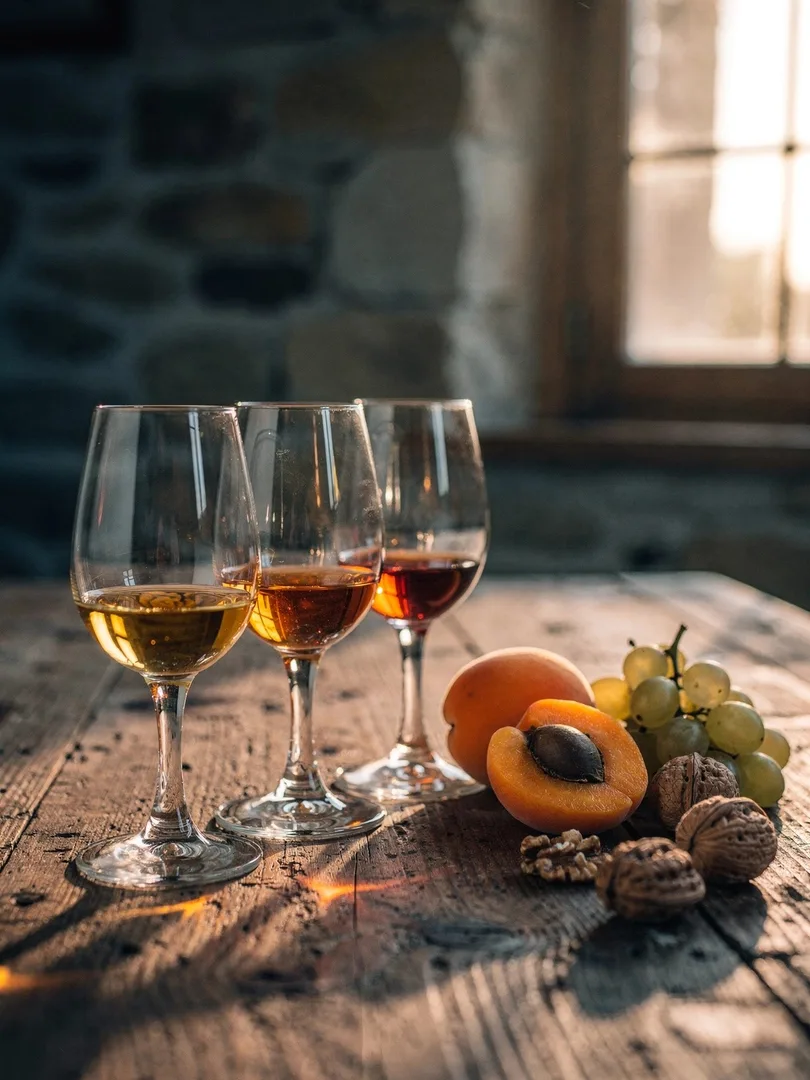
What does a Cognac from the Grande Champagne taste like? First blossom, then ripe apricot, and later, with long cask aging, honey, dried fruit, walnut and roasted almonds. The wood contributes vanilla and spice, but if you want to taste the cru itself, pay attention to the fresh acidity beneath the age, the lingering echo of the chalk.
One example from Segonzac is the Frapin Château de Fontpinot XO. The house points to vines from its own estate. Daniel Bouju in Saint-Preuil, a grower-distiller from the Grande Champagne, by contrast distills the wine from his own vines in a small still on the lees, and this shapes the character of his brandies.
The right glass is a tulip glass or a nosing glass that narrows toward the top, concentrating the aroma. Fill it only a few centimeters high. Room temperature is sufficient; the brandy shouldn't be specially warmed, and the warmth of the hand on the glass will open it up a little if needed.
It's best to proceed in three steps. First just smell, without inhaling deeply, since 40 percent alcohol can mask the finer notes. Then take a small sip and let it spread across the tongue. A drop of water can reveal what lies beneath, and is considered standard practice among professional tasters.
Anyone tasting several brandies in succession should start with the youngest and finish with the oldest. This way, you can trace the journey from fresh blossom to matured cask aromas. Water and a piece of bread serve to cleanse the palate between glasses, not chewing gum or strong coffee.