Oak and the angels' share
Maturation & Storage
What's the minimum age for Cognac? Two years in oak; it may not be sold under this name before that, and it must enter the bottle at a minimum of 40 percent alcohol. The Grande Champagne has no deadlines of its own, but a reputation for letting its brandies mature slowly. Widely regarded as reserved when young, they only open up with the years.
Age is counted in Comptes. Compte 00 is the vintage year of distillation. Every 1 April thereafter, the brandy advances one stage, first to Compte 0, then to 1 and onward. VS requires Compte 2, VSOP Compte 4, and XO has required Compte 10, meaning at least ten years, since 1 April 2018. Previously, six sufficed. What always counts is the youngest brandy in the blend, not the oldest.
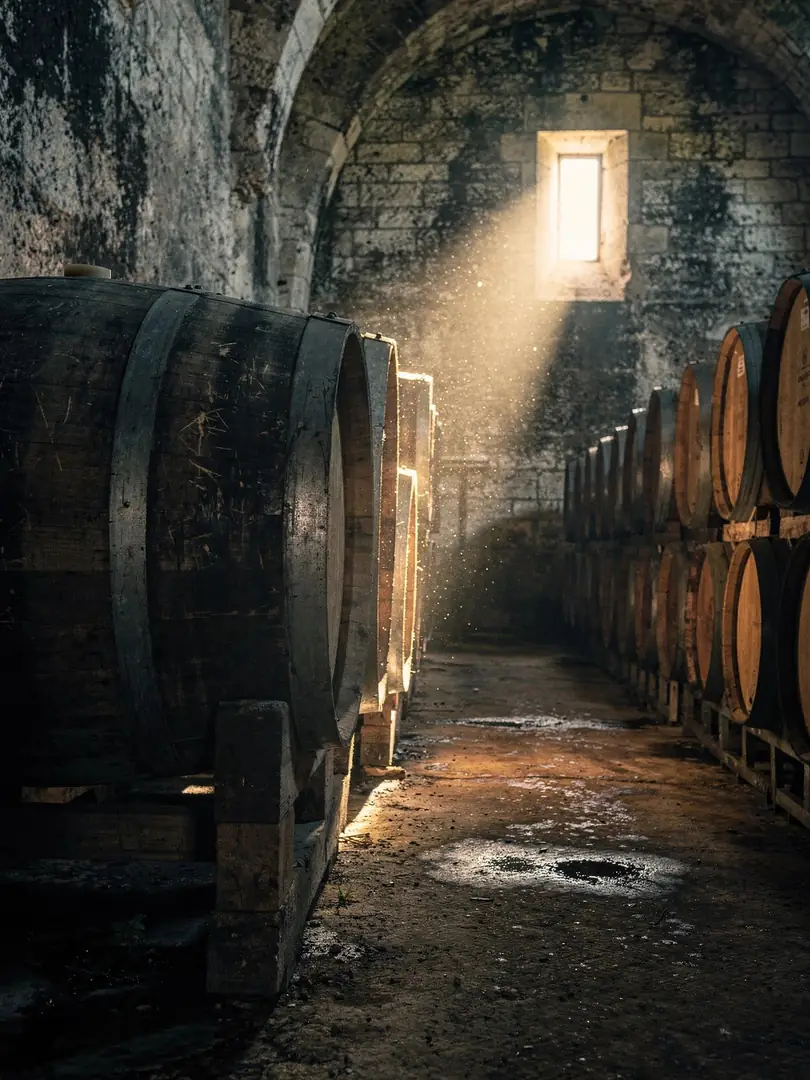
The casks are oak, often from the Limousin forest. The wood releases tannins, vanilla and color, and lets tiny amounts of air reach the brandy. Through the pores, around 41 million bottles' worth of Cognac evaporate every year, and about 2.2 billion bottles' worth lie aging in the region's cellars. Growers call this the part des anges, the angels' share.
In the chais of the Grande Champagne, casks rest on racks in semi-darkness. Whether a brandy loses more alcohol or more water as it ages depends on the humidity of the cellar, which is why every cellar is considered to have its own character. Standing in the limestone cellar of a grower-distiller in Segonzac, you smell that humidity immediately.
At the end comes the blending. A cellar master combines brandies of different vintages and casks into the Cognac the house wants to present. Color and roundness may be adjusted within narrow limits using caramel coloring, oak infusion and sugar. Age statements like XO therefore mainly tell you about the minimum age, not about the finished taste.