Cidre Instead of Mash
Mash & Fermentation
How is Calvados made? It doesn't start with a mash of crushed fruit pulp, but with cidre, fermented apple juice. Under EU law, a brandy made from cidre falls into its own category of spirits distilled from cider, perry, or both.
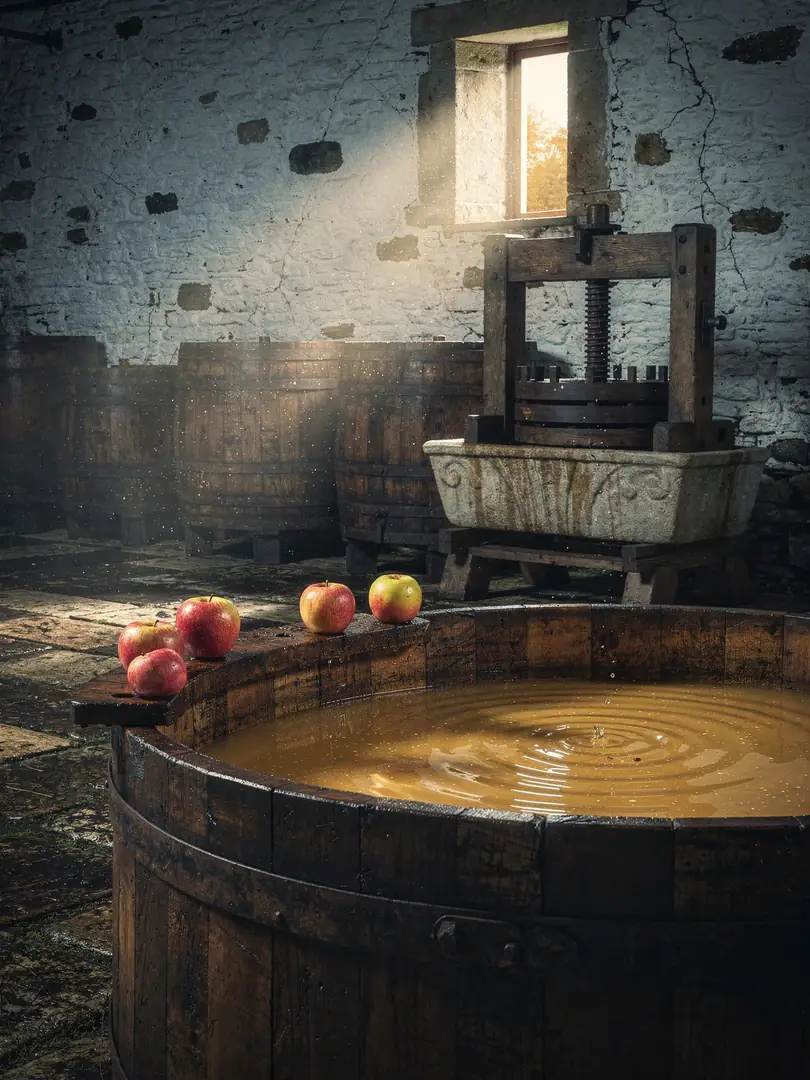
First, the apples are crushed. The pulp sits for a while so color and aroma migrate from the skin into the juice, then it's slowly pressed. Depending on the house, the juice goes into casks or tanks, where fermentation begins.
Yeasts convert the fruit sugar into alcohol and carbon dioxide. Whether fermentation happens spontaneously with the wild yeasts from the apple skins or with added cultured yeast is up to each house. In the Pays d'Auge, fermentation proceeds slowly, with the specifications requiring at least six weeks. This duration gives the cidre time to fully develop its aroma, and the resulting spirit must come from cidre with a minimum alcohol content of 4.5 percent.
The cidre that goes into the still isn't the sparkling apple drink you'd find at a crêperie. It's dry and tart, with little residual sugar and plenty of aroma. Methanol also forms at this stage, from the pectin in the apples, which is why EU law sets maximum limits. Methanol becomes dangerous in adulterated alcohol, not in properly made Calvados.
On the farms around Cambremer, everything follows the seasons: harvest begins in autumn, pressing takes place in the weeks that follow, and fermentation stretches into winter. Only once the cidre is clear and fully fermented does it move on to the still.
If a Calvados carries the designation "Production fermière," the fruit, cidre, and bottling must all come from the same farm. Some of the fresh juice is never fermented at all; instead, it's later fortified with Calvados to make Pommeau de Normandie.