Two Passes
Distillation
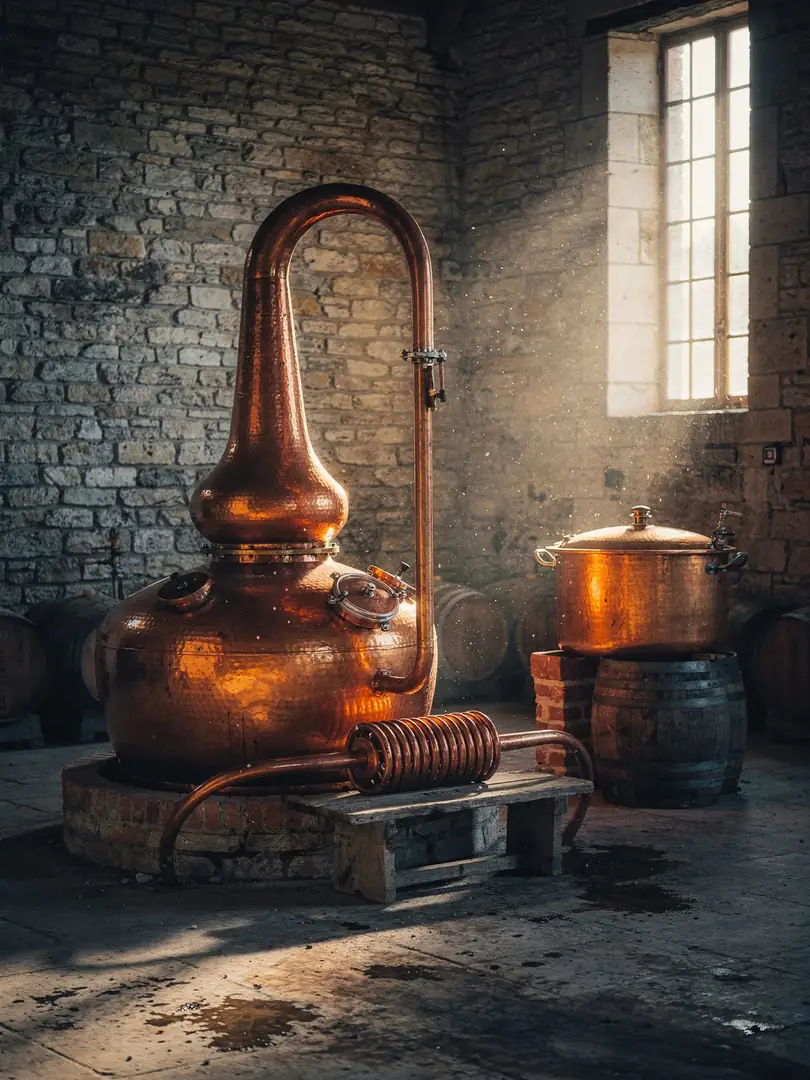
Is Calvados double-distilled? In the Pays d'Auge, without exception. The rules permit only the pot still with two passes, known in French as "alambic à repasse"; a column still is ruled out entirely.
The still is made of copper, which binds sulfur compounds and conducts heat evenly. In the first pass, the cidre is heated; alcohol and aromatic compounds evaporate before water does, and the vapor condenses into a low-alcohol raw spirit.
The second pass separates what's worth keeping from what doesn't belong in the glass. The distiller collects the heads separately, with their volatile, sharp compounds, followed by the heart, the good stuff, and finally the tails, with their heavy, oily aromas. Only the heart becomes Calvados. Exactly where these cuts fall depends on the distiller's experience, not the clock.
The distillate stays below 72 percent alcohol. Subsequent rectification, meaning purification toward near-neutral alcohol, is forbidden, since it would strip away exactly what the cidre was chosen for in the first place.
Double distillation in a pot still costs time and fuel. A single batch yields less spirit than a column still's continuous run, and the pot must be emptied and refilled after every pass. In exchange, the brandy keeps more of what's in the cidre: fruit, acidity, and a certain rawness.
Boulard states that it has double-distilled all its Calvados since the house was founded in 1825. At Clos de la Hurvanière, three copper pot stills are in use, two of which, according to the family, date back to the early 20th century. Trying this at home, by the way, is out of the question: in many countries distilling without a permit is illegal, and the heads contain compounds that are harmful to health.