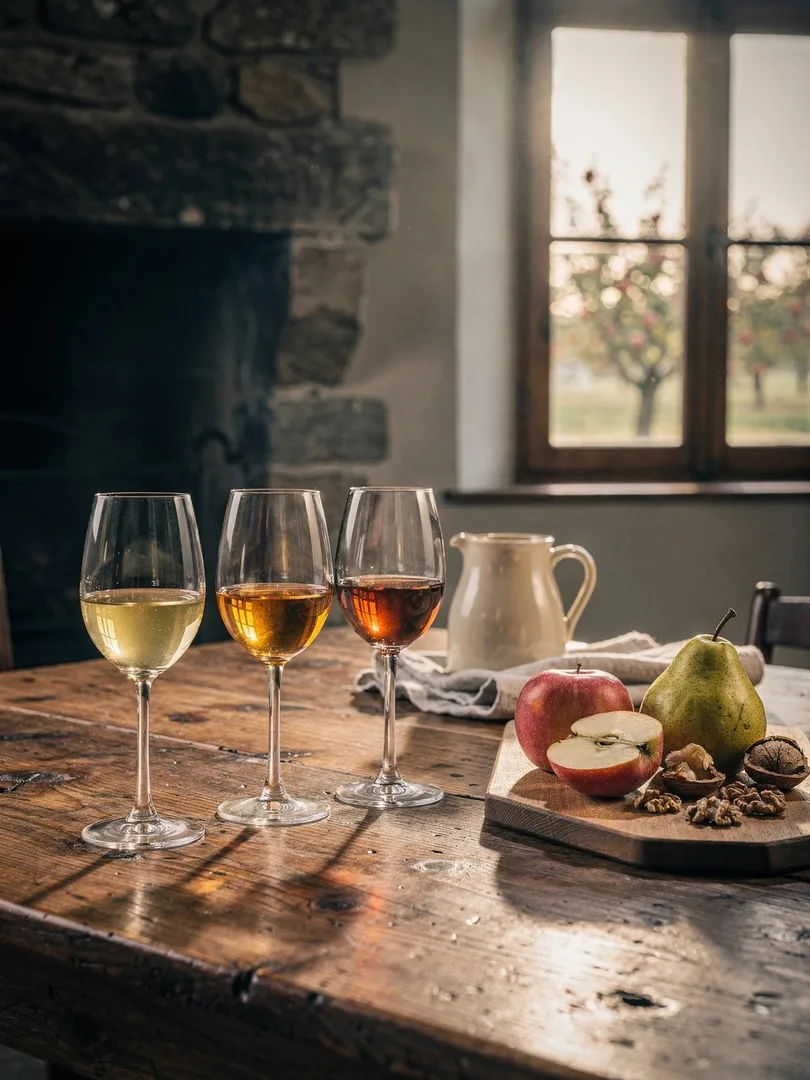
Glass, Aroma, Warmth
Tasting
How do you taste Calvados Pays d'Auge? A tulip or nosing glass, narrowing toward the top, captures the aromas better than a wide snifter. It should stand steady on the table, and the spirit should be served at room temperature, not chilled, since cold mutes the aromas.
The nose comes first. Hold the glass just below your nose and breathe gently, since the alcohol would otherwise overpower everything. Typical for the Pays d'Auge are baked apple, pear, and quince, along with vanilla, spice, and a slightly tart note from the wood.
In the mouth, the differences between age grades become clear. Young spirits feel fresh and a touch sharp, mid-aged ones round out with spice and nut, old ones offer dried fruit, leather, and long, calm finishes. The term "finish" refers to how long the flavor lingers after swallowing, and how it evolves.
Four houses from the region make good examples. Père Magloire in Pont-l'Évêque, Boulard and Christian Drouin around Coquainvilliers, and the family-run Roger Groult in Saint-Cyr-du-Ronceray all bottle Calvados Pays d'Auge across several age grades. When comparing houses, choose the same grade, say two VSOPs, and pay attention to cask and fruit.
Tasting happens in small amounts. Calvados has at least 40 percent alcohol, and the nose tires quickly, so professionals work with small sips and pauses, with water in between. A drop of water in the glass can open up certain spirits, releasing aromas the alcohol otherwise holds back.