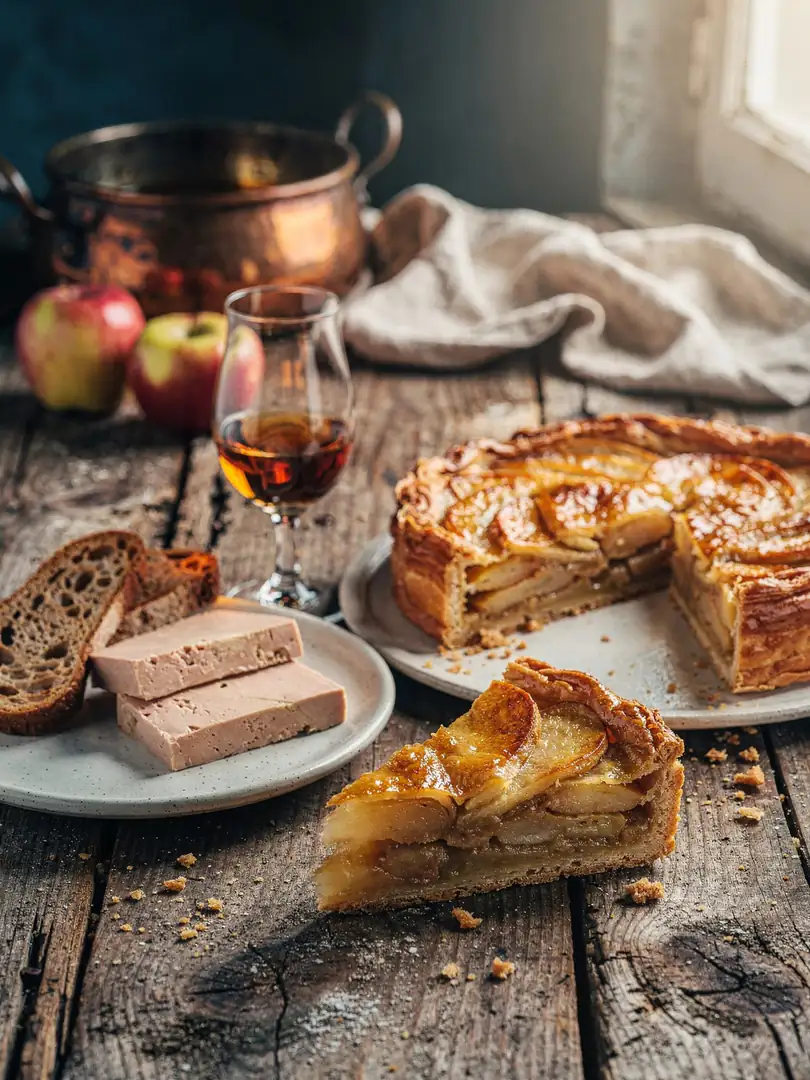
Croustade, Foie Gras
Food & Tradition
What do you eat with Armagnac? In Gascony, the croustade belongs on the table—also called pastis gascon: a dough of flour, water, salt, and egg yolk, stretched across tables until it's nearly transparent, then layered over apples drizzled with Armagnac. The traditional measure for the dough's thinness is a bridal veil.
According to tradition, the recipe is of Moorish origin and has endured on the farms of the Gers, where grandmothers would stretch the dough on Saturday for Sunday's table. Besides the classic apple version, there are variations with plums, with pear and chocolate, or even with foie gras.
Foie gras, the fattened duck or goose liver, is the region's second great dish. Its richness and sweetness call for a brandy with spice and tannin to match: the bold Ténarèze holds its own without being overwhelmed. Many recipes call for drizzling the liver with a splash of Armagnac before cooking.
The after-dinner digestif is a ritual in Gascony. But the idea that it speeds up digestion isn't true: measured effects show that alcohol actually slows gastric emptying, even if you feel more at ease afterward. It's relaxation, not chemistry.
Celebrations in Condom include the International Bandas Festival, where brass bands parade through the streets, and in the Gers, harvest and distilling are part of the yearly rhythm that brings farms and families together. A small glass of Ténarèze pairs well with croustade—nothing more is needed.