Tulip Glass and Room Temperature
Tasting
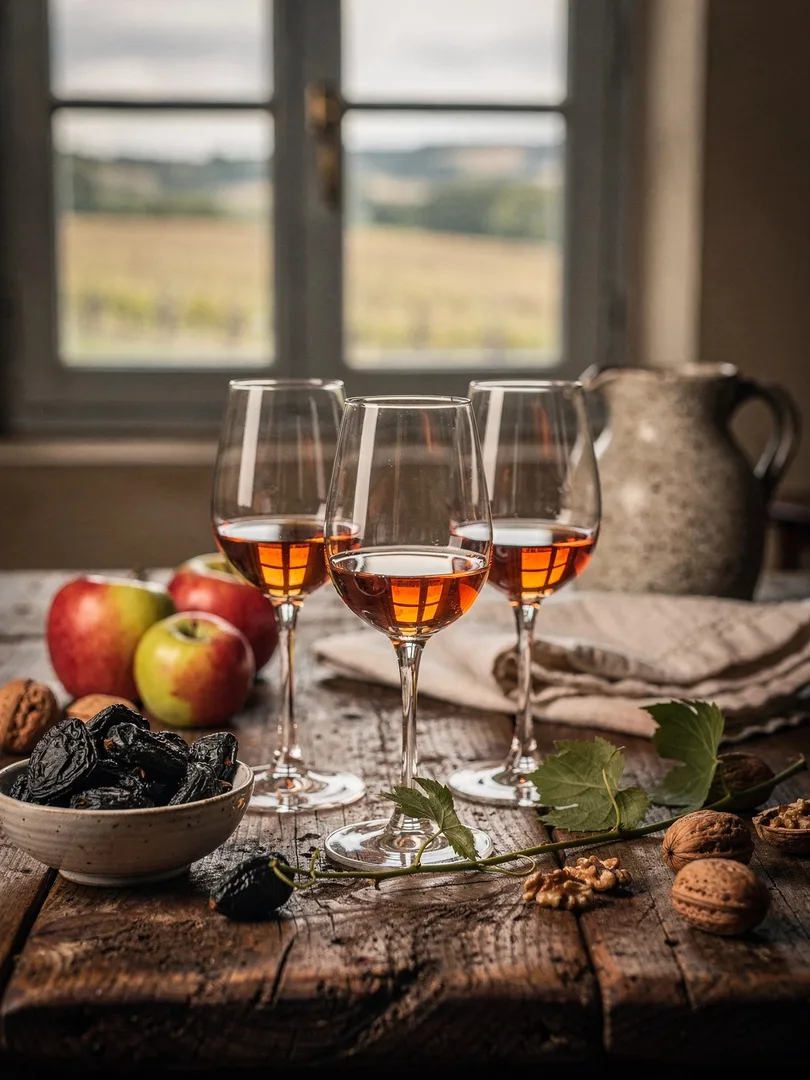
A Ténarèze Armagnac is tasted in a tulip glass or nosing glass, a glass that narrows toward the top and concentrates the aromas. The temperature should be room temperature, not warmer: warming the glass in your hand pushes the alcohol forward and masks the finer notes.
The nose comes first. A young Armagnac smells of grape, plum, and dry wood; older bottlings reveal prune, raisin, vanilla, tobacco, and spices reminiscent of a kitchen cupboard. Then the palate: the Ténarèze shows power, spice, and a finish that lingers longer than in many neighboring styles.
Houses from the region make good examples. Janneau from Condom offers, among others, a VSOP and older bottlings that show the classic side of the Ténarèze. Delord from Lannepax bottles a vintage Ténarèze from 1979 alongside its age-graded releases, and also has a Blanche in its range.
The Blanche calls for a different approach. Without barrel aging, it smells of grape and lemon, tasting clear and sharp, without the sweetness of an aged Armagnac. Tasting it alongside an old Ténarèze reveals two sides of the same wine. A drop of water opens up both spirits, but with the Blanche it rounds things out, while with the old Armagnac it softens.
Enjoyment here is a matter of patience: small sips, pauses in between, no rushing. Armagnac tastes different when given time, and sipping water in between helps you perceive the finer notes more clearly.