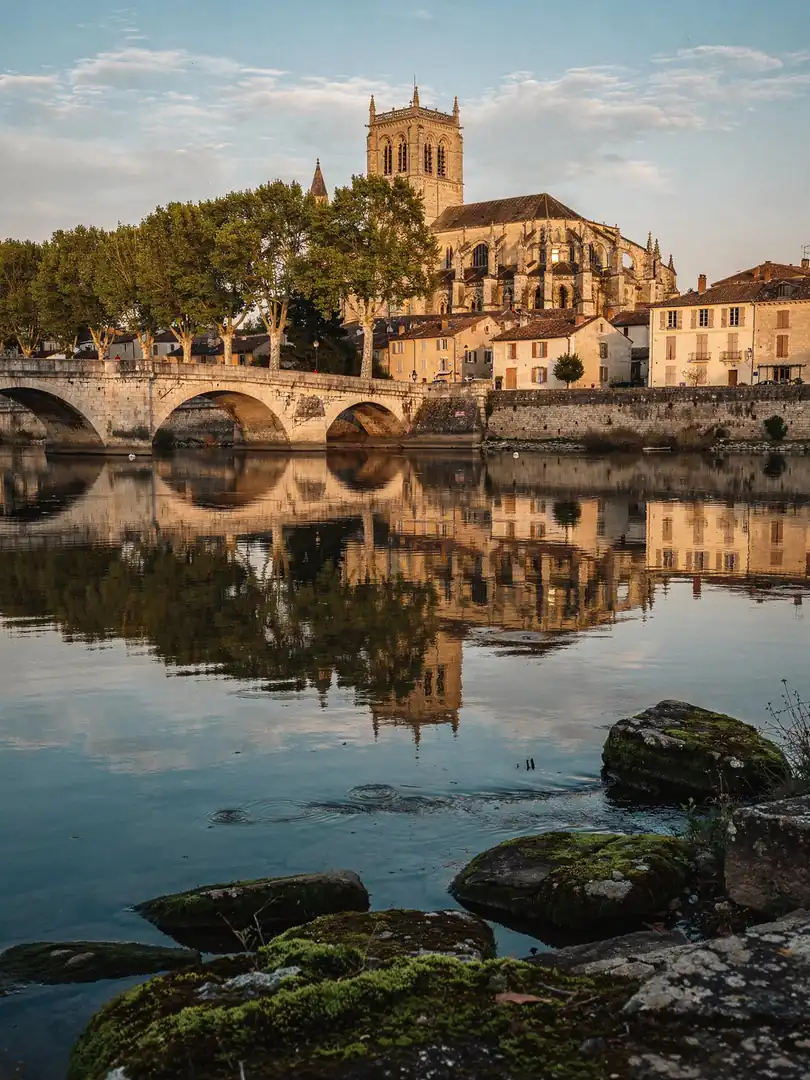
Condom and Auch
Region & History
Condom is the capital of the Ténarèze. The town, in the Gers département, sits on the Baïse, a small river that once carried Armagnac by boat toward Bordeaux. The golden-hued Saint-Pierre Cathedral, built in under twenty years starting in 1507 under Bishop Jean Marre, still towers over the old town today.
What exactly is the Ténarèze? A decree from May 25, 1909 divided Armagnac country into three zones: Bas-Armagnac in the west, Ténarèze in the middle, and Haut-Armagnac in the east, around Auch. Together they span 245 communes in the Gers, plus 29 in the Landes and 18 in the Lot-et-Garonne.
If you want to know how an Armagnac from the Ténarèze differs from the others, look to the soil. Limestone-rich clay produces brandies that taste bold and spicy, only softening after long aging. In Haut-Armagnac, which industry sources say supplies only a small share of total output, the vines grow on cold limestone, keeping the wines acid-driven.
Pierre-Étienne Janneau founded his house in Condom in 1851; according to the house, barrels still age in cellars dating back to that founding year. In Lannepax, Prosper Delord established a distillery in 1893 that remains family-owned to this day. And in Auch, a man named Tuilière patented a still in 1814 that operates without interruption.
The name Armagnac is protected in the EU as a geographical indication for wine spirit, and additionally as an AOC in France. To be sold, an Armagnac must be at least 40% ABV. According to 2012 figures, seven out of ten liters come from winegrowers and cooperatives, with the rest from merchants who buy the brandy and age it themselves.