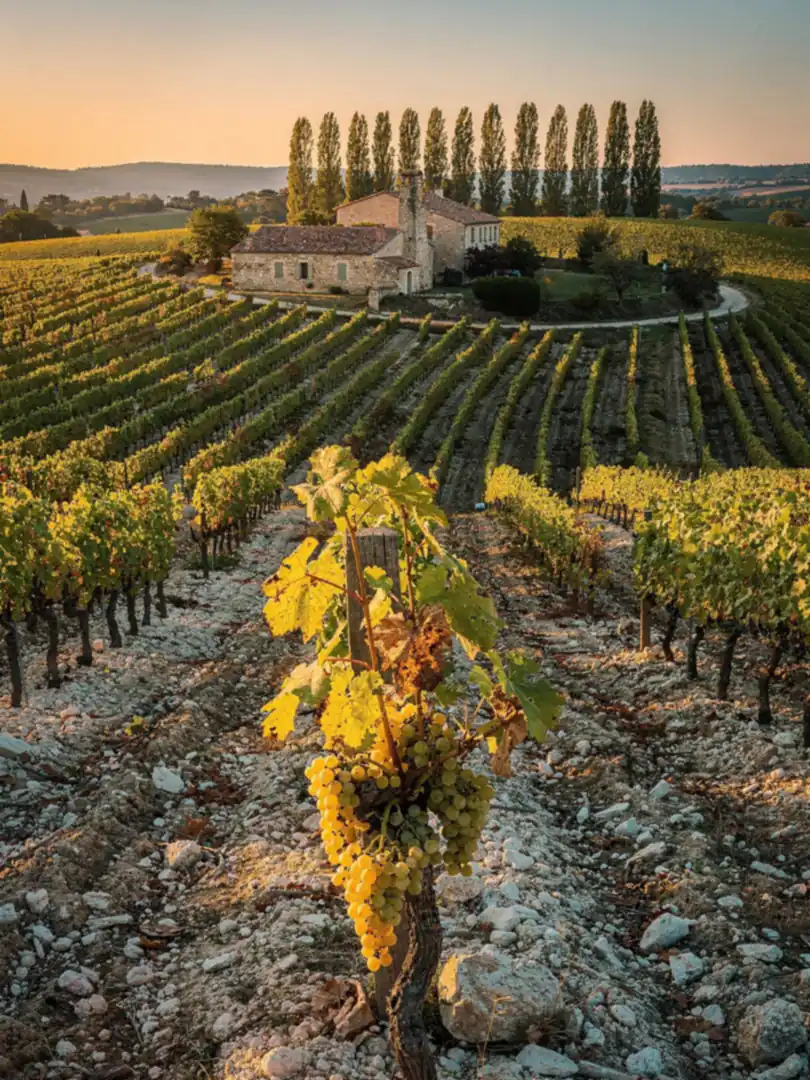
Grapes and Limestone
Fruit & Raw Material
On the hills east of Condom grows Ugni Blanc, the same grape that supplies the vast majority of Cognac as well. It yields a high-acid, low-alcohol white wine—and that's exactly the advantage for distilling: the acidity keeps the wine fresh, and because the wine contains little alcohol, the aromas stay more concentrated during distillation.
The specifications allow ten grape varieties, from Baco Blanc to Folle Blanche to Colombard. In the Gers, alongside Ugni Blanc, Colombard is also common—the same grape used to make the fresh white wines of the Côtes de Gascogne.
Which grapes get harvested for Armagnac depends on the soil. In the Ténarèze, the clay is limestone-rich. It retains water through the summer, and the limestone gives the wine structure and tension. Industry experts therefore say that brandy from here matures later than that from the sandier west: it simply needs more time in the barrel.
Harvest happens in autumn. Grapes destined for distilling wine are picked slightly earlier than those for table wine, to preserve acidity; high sugar levels aren't the goal. The grapes then go to the press, and what remains isn't fruit pulp as with a fruit brandy, but a juice destined to become wine.
In the east, around Auch, wine is just one crop among many. The vines stand between fields and patches of forest, plots are smaller, and the region's share of total Armagnac production remains modest. The soils here are colder and richer in limestone, and the wines correspondingly tauter, with an acidity that's still noticeable later in the finished brandy.