Raki and Mezedes
Food & Tradition
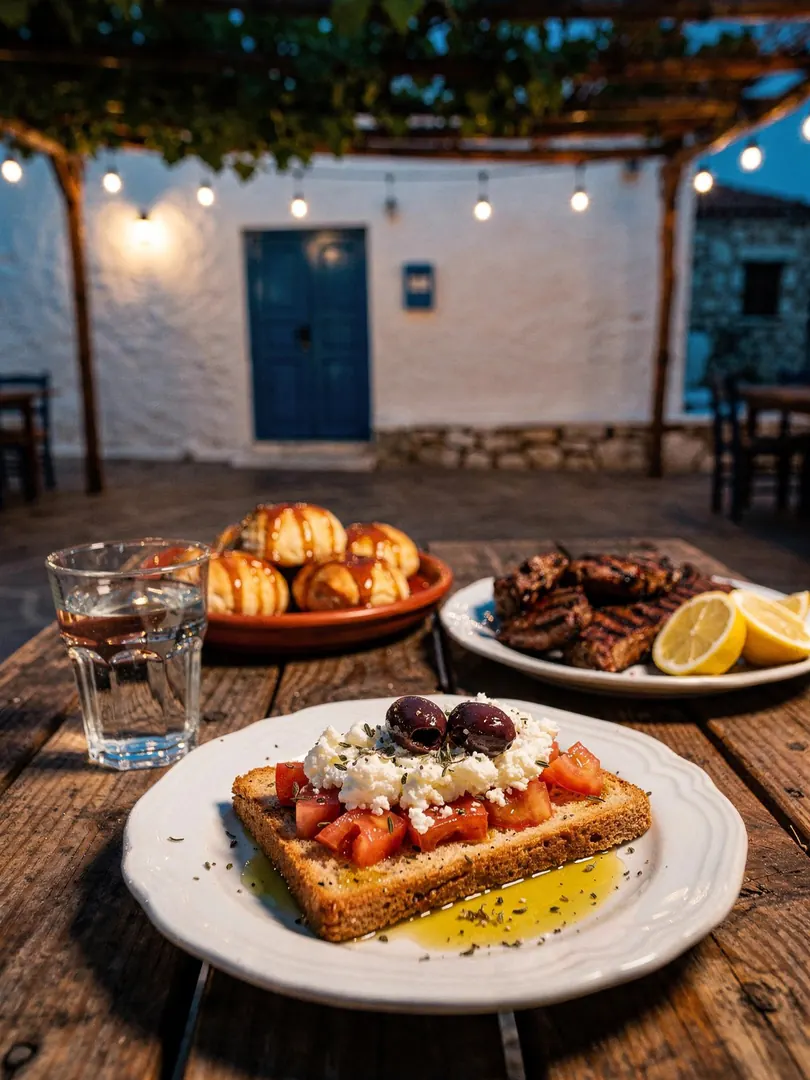
On Crete, Mezedes and Raki go hand in hand. In Heraklion, there are Rakadika, small taverns where several small plates are shared alongside Raki, with no main course at all. Often, something arrives with your glass that you never even ordered.
A classic is Dakos, a plate of hard barley rusk topped with chopped tomatoes, Mizithra or Feta, olives, oregano, and olive oil. The salt and oil soften the brandy's power, making the Tsikoudia taste gentler alongside it.
Antikristo also pairs well: lamb or goat roasted on wooden spits arranged in a circle around a fire, for up to six hours, a dish from the island's shepherd cuisine. The meat cooks in its own fat, and a glass of Raki afterward chases away the heaviness. To finish, there's Kalitsounia, small pastries filled with cheese, sometimes sweetened with honey.
Then there's the hospitality. Visitors to Crete are often poured a glass of Raki right after being welcomed, and again at the end of a meal. It's a gesture of friendship, not a sale, and it's declined politely, but never bluntly.
In autumn, it becomes a communal affair. When the Kazani glows, neighbors and relatives gather around the still, and beside the fire there's food, conversation, and the first fresh glass. Rakomelo, with honey and cinnamon, is the companion for cold winter evenings, and anyone wanting just a single glass takes it clear.
At farewell, there's often a second glass on Crete, and hosts rarely pour it without a little something on the plate alongside. The brandy remains a companion to conversation, never a replacement for a course.