Clear and Bold
Tasting
The best way to open a Tsikoudia is like any pomace brandy: a small, narrow glass, a tulip or a nosing glass, with just a small pour. On Crete, however, it's drunk from tiny glasses that get refilled again and again, never swirled.
Start with the nose. Fresh Tsikoudia smells of grape skins, raisins, and dried herbs, sometimes almond and hay. Warming the glass in your hand makes the alcohol more pronounced, so it's best held by the stem, if there is one, and sipped in small amounts.
On the palate, Tsikoudia is dry, straightforward, and bold, without the sweetness of a liqueur. On the finish, grape and a slight bitterness remain. This is unlike Ouzo, where anise overwhelms everything, and unlike Zivania from Cyprus, which, with its higher strength, often comes across sharper.
Served cool but not ice-cold, the aromas come through most clearly. Drink it too cold, and you lose the grape notes, tasting mostly alcohol instead. A glass of water for rinsing sits alongside, and tasting here isn't about drinking as much as possible, but comparing calmly and carefully.
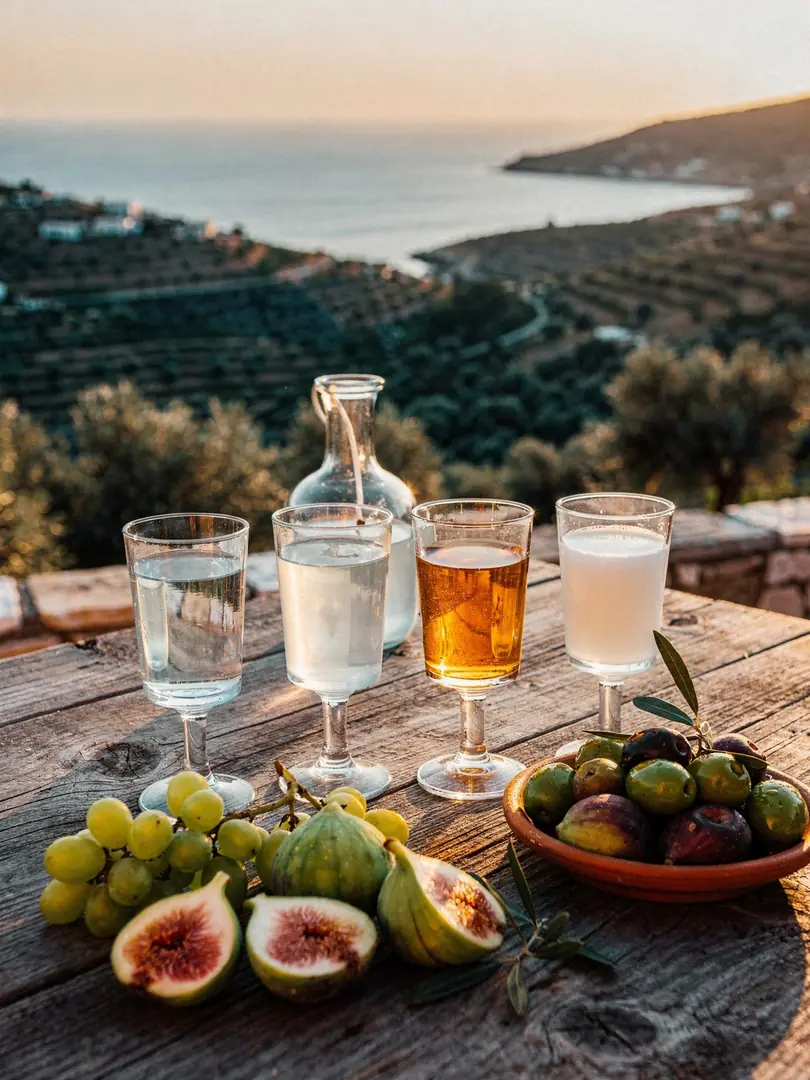
Good examples for comparison are Tsikoudia of Crete, Zivania from Cyprus, a honey-sweetened Rakomelo, and, as a counterpoint, an anise-flavored Ouzo. These four glasses on a wooden table, with a few grapes alongside, show faster than any description what the name Raki means on Crete — and what it doesn't.